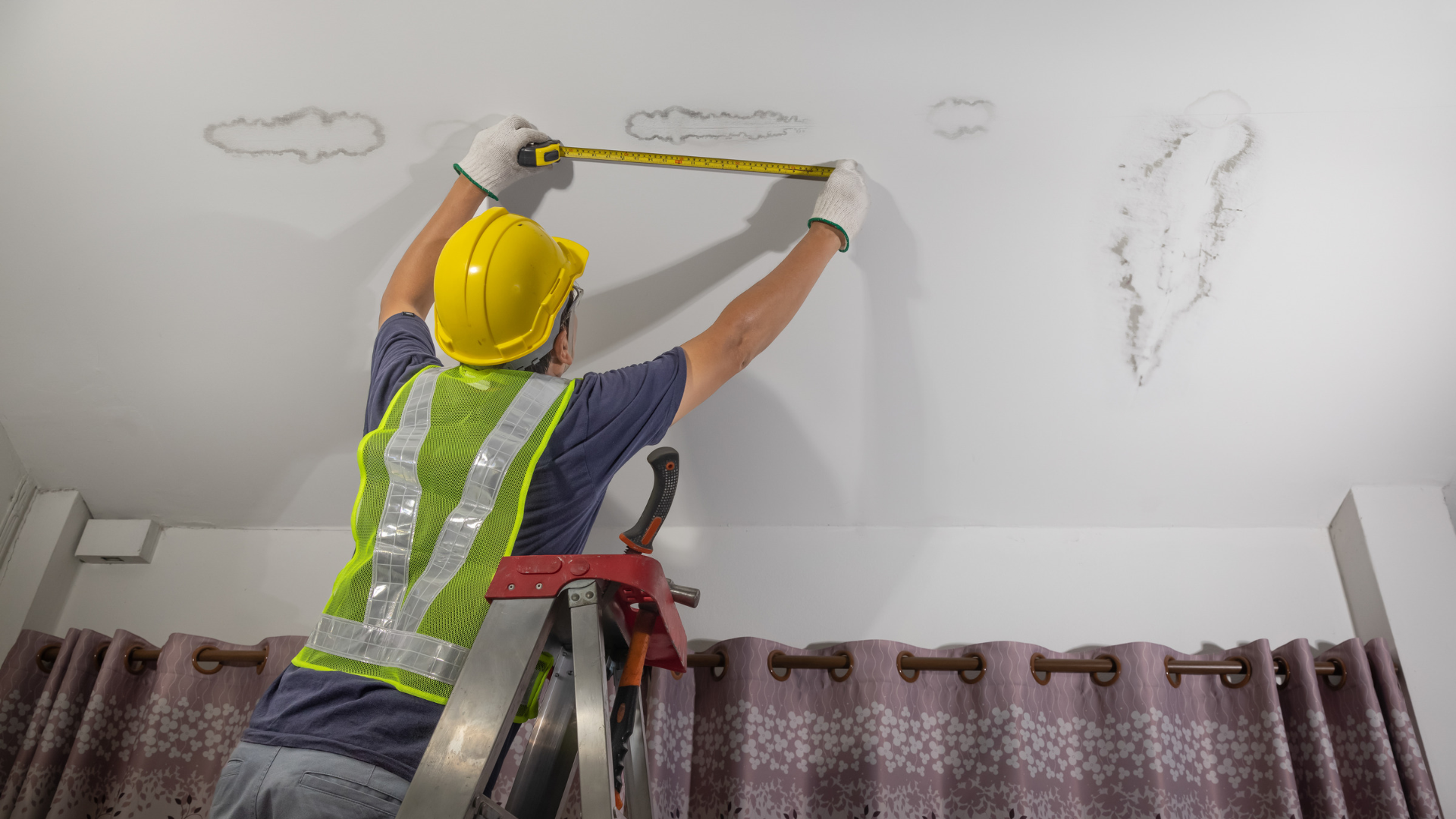
Why Flat Roofs Start Leaking Around Drains After Heavy Fall Rain
A flat roof drain moves substantial water through one detailed membrane opening. During light rain, a partial blockage or small flashing defect may not receive enough water to leak. Heavy rain raises water around the drain, submerges seams longer, and reveals weak connections. The interior drip may appear near the drain, several feet away, or after the storm ends.
That makes a flat roof leaking around a drain a diagnosis problem before a patching problem. Debris may restrict flow, but membrane, clamping ring, drain bowl, pipe, insulation, or slope can contribute. EPDM and TPO need different materials, so generic coating may complicate later work without solving the failure. This guide explains drain leaks, useful evidence, and repairs that manage the opening and surrounding water.
Why Roof Drains Become Vulnerable During Heavy Rain
A low-slope roof directs water toward drains, scuppers, or gutters despite its subtle pitch. At a drain, the membrane must transition into the assembly while resisting movement and weather. The strainer must stay open, flashing secure, and piping able to carry water away. A defect in any component can resemble one simple drain leak.
Heavy rain increases water depth and duration around the opening. Debris can restrict flow enough to create ponding water on a flat roof, submerging seams and flashing. GAF’s drain-maintenance guidance explains that drains prevent ponding and need regular maintenance. A defect may appear only when rainfall exceeds the compromised system’s capacity.
Components That Can Fail Around a Flat Roof Drain
The opening includes more than the grate. A strainer blocks debris, a bowl receives water, and a clamping or flashing assembly joins membrane to drain. Insulation and decking provide a stable substrate beneath that connection. Drain piping must then carry collected water without leaking into the building.
Those layers create several failure points. A loose clamp permits water beneath membrane, damaged flashing can split, and wet insulation may deform into a low spot. A cracked bowl or failed pipe joint can leak while membrane flashing remains intact. Diagnosis should separate roofing failure from pipe failure before selecting materials.
What Heavy Fall Rain Reveals About Drainage and Membranes
Fall storms arrive while leaves and small branches accumulate on roofs. A blocked strainer slows discharge, spreading water to seams, patches, curbs, or normally dry details. Cooler temperatures can reduce flexibility in aged materials as roof components move. A storm may expose a drainage limitation, membrane defect, or both.
Building type and exposure influence the pattern. New Haven has larger low-slope roofs, while garages and additions in Branford, Guilford, Madison, Westbrook, and Old Saybrook may use smaller membranes. Coastal wind can move leaves into low areas after a roof appeared clear. GAF’s ponding-water bulletin says positive drainage remains important even when a membrane tolerates temporary water.
Heavy rain commonly exposes:
- Blocked strainers: Leaves and debris restrict the opening and raise water depth.
- Loose drain flashing: Water reaches beneath a membrane edge or clamping detail.
- Open seams or patches: Ponding extends to defects outside the immediate drain bowl.
- Depressed insulation: A low area holds water and keeps the membrane wet longer.
- Drain-bowl movement: Different components shift and stress the transition detail.
- Pipe leakage: Water escapes below the drain after it passes through the roof opening.
- Inadequate drainage capacity: The system cannot move stormwater fast enough under peak flow.
How to Tell Whether the Drain, Membrane, or Pipe Is Leaking
Interior location is evidence but not a map of the breach. Water can move beneath membrane, follow decking or framing, soak insulation, and exit at a low point. A stain under the drain may come from flashing, bowl, or pipe. A distant stain can still begin at the drain.
An inspection compares roof conditions with interior symptoms and rainfall timing. The roofer checks the strainer, sump, membrane attachment, seams, patches, penetrations, slope, and wet insulation. Accessible piping may need another trade’s evaluation if roofing remains sound. Roof Repair Pro’s flat-roof diagnosis traces water paths instead of assuming the stain marks the breach.
| Pattern | More likely concern | Useful confirmation |
|---|---|---|
| Water ponds around a debris-covered strainer | Restricted drainage | Clear accessible debris safely and observe whether water exits normally |
| Membrane edge is loose at the drain | Flashing or clamping failure | Inspect attachment, compatibility, and moisture beneath the detail |
| Roof surface is dry but pipe drips during discharge | Drain bowl or plumbing connection | Observe accessible piping while water flows through the system |
| Leak begins only after water has ponded for hours | Seam, patch, flashing, or submerged defect | Trace the maximum water area and inspect every covered detail |
| Drain area feels soft or depressed | Wet insulation or deck deterioration | Use appropriate moisture investigation and selective opening |
| Several drains back up in the same storm | System blockage or capacity issue | Evaluate downstream piping and drainage design, not only membrane patches |
What Property Owners Should Do During and After the Leak
Protect people and contents first. Keep occupants away from bulging ceilings, wet electrical fixtures, slippery floors, and structural movement. Move belongings safely, collect water without overloading one area, and photograph timing and location. Never climb onto a wet roof or enter ponded water during a storm.
After conditions are safe, report active water, visible ponding, sensitive equipment, and occupied units. Interior descriptions help prioritize response, but permanent flat roof leak repair requires safe access and suitable conditions. If water is entering or a ceiling is failing, Roof Repair Pro’s emergency service can address immediate protection first. Save photos before, during, and after the storm to show changing water levels.
Useful actions include:
- Isolate the affected interior area and protect people from electrical or ceiling hazards.
- Record when leakage begins relative to the rain and when it stops.
- Photograph interior stains, ponding visible from safe locations, and drain discharge behavior.
- Note whether the drain handles light rain but backs up during heavy flow.
- Avoid puncturing ceilings or altering drains unless directed by a qualified professional.
- Request written findings that separate drain clearing, membrane repair, substrate work, and pipe repair.
A Decision Framework for Drain Cleaning, Repair, or Broader Work
The smallest durable solution corrects the confirmed failure. If debris restricted a sound drain without damage or leakage, cleaning and maintenance may be enough. Loose flashing needs compatible membrane repair, while a cracked bowl or pipe joint may involve another trade. Soft substrate, widespread seam failure, or repeated ponding can justify broader work.
Overall roof condition affects the decision but does not replace diagnosis. A localized drain detail may be repaired on serviceable EPDM or TPO, while widespread adhesion loss makes patches unreliable. Roof Repair Pro checks slope, seams, membrane, flashing, drains, and low spots. The scope should explain the cause, removed material, wet-layer handling, and restored drainage.
| Confirmed condition | Practical response | Decision question |
|---|---|---|
| Surface debris restricts an intact drain | Clean the drain and establish inspection intervals | Did ponding expose any seams or damage the membrane? |
| Local membrane flashing has released | Rebuild the drain detail with system-compatible materials | Can the surrounding membrane accept a durable bond? |
| EPDM seam or patch near the drain is open | Clean, prime, and repair with compatible EPDM components | Is moisture trapped beneath the membrane? |
| TPO weld or flashing has failed | Prepare and heat-weld compatible TPO repair material | Is the existing membrane clean and serviceable enough to weld? |
| Drain bowl or pipe joint leaks | Coordinate repair of the drainage component | Has the roofing connection also been disturbed? |
| Wet insulation or soft deck surrounds the drain | Remove affected layers and rebuild the section | How far does moisture extend, and what created the depression? |
| Ponding returns after drain repair | Correct slope, low spots, or drainage capacity | Will the proposed change provide positive drainage? |
How EPDM and TPO Drain Repairs Differ
EPDM rubber repairs require cleaning and compatible primer, seam tape, flashing, or membrane materials. Dirt, oxidation, moisture, and incompatible coatings can prevent reliable bonding. Drain details may use reinforced or uncured flashing shaped to the transition. A patch must reach sound membrane and preserve flow into the drain.
TPO normally uses heat-welded seams and compatible thermoplastic flashing. Repair requires clean material, proper temperature and overlap, and testing of the completed weld. Roof Repair Pro provides EPDM and TPO repair matched to the existing system. Correct identification matters because a material that sticks temporarily may remain incompatible.
A system-specific repair generally includes:
- Removing debris and standing water after conditions are safe.
- Mapping the ponded area, seams, previous patches, and visible defects.
- Identifying EPDM, TPO, or another membrane before selecting materials.
- Checking attachment, flashing, insulation, and deck condition around the drain.
- Removing wet or unsound material where the approved scope requires it.
- Rebuilding the drain detail with compatible products and correct overlaps.
- Testing seams or welds and confirming water can reach the opening freely.
How to Prevent Repeat Leaks Around Flat Roof Drains
Drain maintenance should occur before debris is submerged. Schedule safe inspections around leaf drop, major storms, and freezing weather, adjusted for nearby trees and roof use. Keep strainers secured and remove debris without damaging membrane. Records should identify drains, repairs, ponding areas, and past interior leaks.
Maintenance cannot correct poor slope, compressed insulation, undersized drainage, or damaged piping. Persistent water requires evaluation for low spots and capacity, not repeated clearing alone. Carlisle SynTec maintenance guidance includes checking drains, ponding, flashing, and cleanliness. Documentation helps distinguish new damage from worsening conditions.
Include these checks in the plan:
- Keep strainers present, secure, and free of accumulated debris.
- Inspect seams and flashing around drains without pulling on the membrane.
- Note how long water remains after rainfall ends.
- Check interior ceilings and accessible drain piping for fresh staining.
- Limit rooftop traffic and protect membrane near service paths.
- Document all patches by material, date, location, and installer.
- Arrange a professional inspection when ponding, softness, or repeat leakage appears.
What Flat Roof Drain and Membrane Repair May Cost
Pricing depends on membrane, access, size, saturation, drain condition, and substrate replacement. Local EPDM flashing differs from TPO work requiring wet-insulation removal and tapered material. Commercial work may involve occupied-space protection, documentation, equipment access, and piping coordination. Estimates should separate membrane, substrate, drain components, disposal, and non-roofing work.
Roof Repair Pro publishes $400 to $1,500 for most residential flat-roof repairs on the CT Shoreline, depending on membrane, failure, and access. This is the company’s planning range, while commercial work is individually scoped. Other figures below are 2026 HomeGuide context, not Roof Repair Pro prices. Inspection is necessary because drain leaks can conceal wet insulation or deck damage.
Estimated 2026 Market Context
| Work category | Published planning range | Source and limits |
|---|---|---|
| Typical Roof Repair Pro residential flat-roof repair | $400–$1,500 | Company-published CT Shoreline range; inspected scope determines the quote |
| Flat-roof repair | $2.50–$10 per square foot | HomeGuide national market range |
| Average flat-roof repair | $300–$1,100 | HomeGuide national average |
| Flat-roof leak repair | $500–$1,200 | HomeGuide national average |
| EPDM membrane repair | $2–$10 per square foot | HomeGuide market context by material |
| TPO membrane repair | $2–$9 per square foot | HomeGuide market context by material |
| Sagging or water-pooling repair | $800–$2,500 | HomeGuide market context; underlying causes vary |
Get the Drain and Membrane Diagnosed Together
A drain-area leak cannot be solved reliably until the roof opening, membrane, substrate, and connected drainage are considered together. Roof Repair Pro inspects the ponding pattern, seams, flashing, drain detail, membrane type, and surrounding roof before recommending work. We repair EPDM, TPO, and modified-bitumen systems with materials compatible with the existing roof instead of covering the area with a generic coating. You receive findings and a written quote tied to the confirmed failure.
If heavy fall rain has exposed a flat roof drain leak in New Haven, Branford, Guilford, Madison, Westbrook, or Old Saybrook, call (475) 800-8876 for a free inspection. Tell us whether water is actively entering, when it begins relative to rain, and whether the roof has a history of ponding or prior patches. Urgent calls involving exposed roofing or active interior water are prioritized according to conditions and safety. Early diagnosis can prevent a localized drain detail from becoming a larger wet-insulation or decking repair.
Related Services & Pages