Why Roofing Nails Pop Through Shingles and Cause Hidden Roof Leaks
A raised roofing nail may look small, but it can affect more than one shingle. As it moves upward, it may lift its shingle or press against the course above. The head can crack or puncture the overlapping shingle, leaving an opening hidden from the ground. Water may then follow the fastener or roofing layers before appearing inside.
That delayed path is why roof nail pops should be diagnosed before repeated rain and freeze-thaw cycles enlarge the opening. The repair is not simply pushing the nail down and covering it with sealant. A roofer should determine why it moved, whether shingles and decking remain sound, and how the repaired courses will drain. This guide explains the causes, leak patterns, repair choices, and warning signs.
What a Roof Nail Pop Actually Is
A nail pop occurs when a roofing fastener no longer sits flush and pushes upward. It may raise the shingle above it, become exposed, or create a bump visible in low-angle light. Some fasteners began underdriven, while others move with the deck and framing. A nail outside the manufacturer’s fastening zone can also fail to secure the shingle correctly.
Not every visible nail is a nail pop. Some finishing details use exposed fasteners sealed for the system, while an unintended nail in the shingle field needs evaluation. GAF’s roof-damage checklist identifies popped, rusted, and exposed fasteners as warning signs. The question is whether the fastener belongs to a correct detail or creates an unprotected path.
Why Roofing Nails Rise or Become Exposed
Fastener movement can begin with installation, decking, or weathering. An underdriven nail starts high, while a high nail above the nailing zone may miss required shingle layers. Angled nails do not seat evenly and leave an edge raised. A nail that misses solid decking, is too short, or enters weak sheathing may lack holding power.
Seasonal movement can worsen a marginal detail. Connecticut roofs cycle through heat, cold, moisture, drying, and ice, which can move wood or loosen a weak fastener. Wind then works a lifted shingle around the nail and seal strip. U.S. Department of Energy asphalt-shingle guidance stresses correct nailing zones and avoiding overdriven or underdriven fasteners.
Common contributors include:
- Underdriven nails: The head never seated flush with the shingle surface.
- Angled fasteners: One edge of the nail head remains raised and can work upward.
- Incorrect nailing location: High or misplaced nails miss the reinforced fastening area or required overlap.
- Weak decking: Damaged, thin, or deteriorated sheathing may not hold the fastener properly.
- Short or unsuitable nails: The fastener does not achieve the required penetration or corrosion resistance.
- Deck and framing movement: Moisture and temperature cycling can expose a marginal installation.
- Wind-lifted shingles: Repeated movement can loosen the fastener and break the shingle seal.
How One Raised Nail Can Create a Hidden Leak
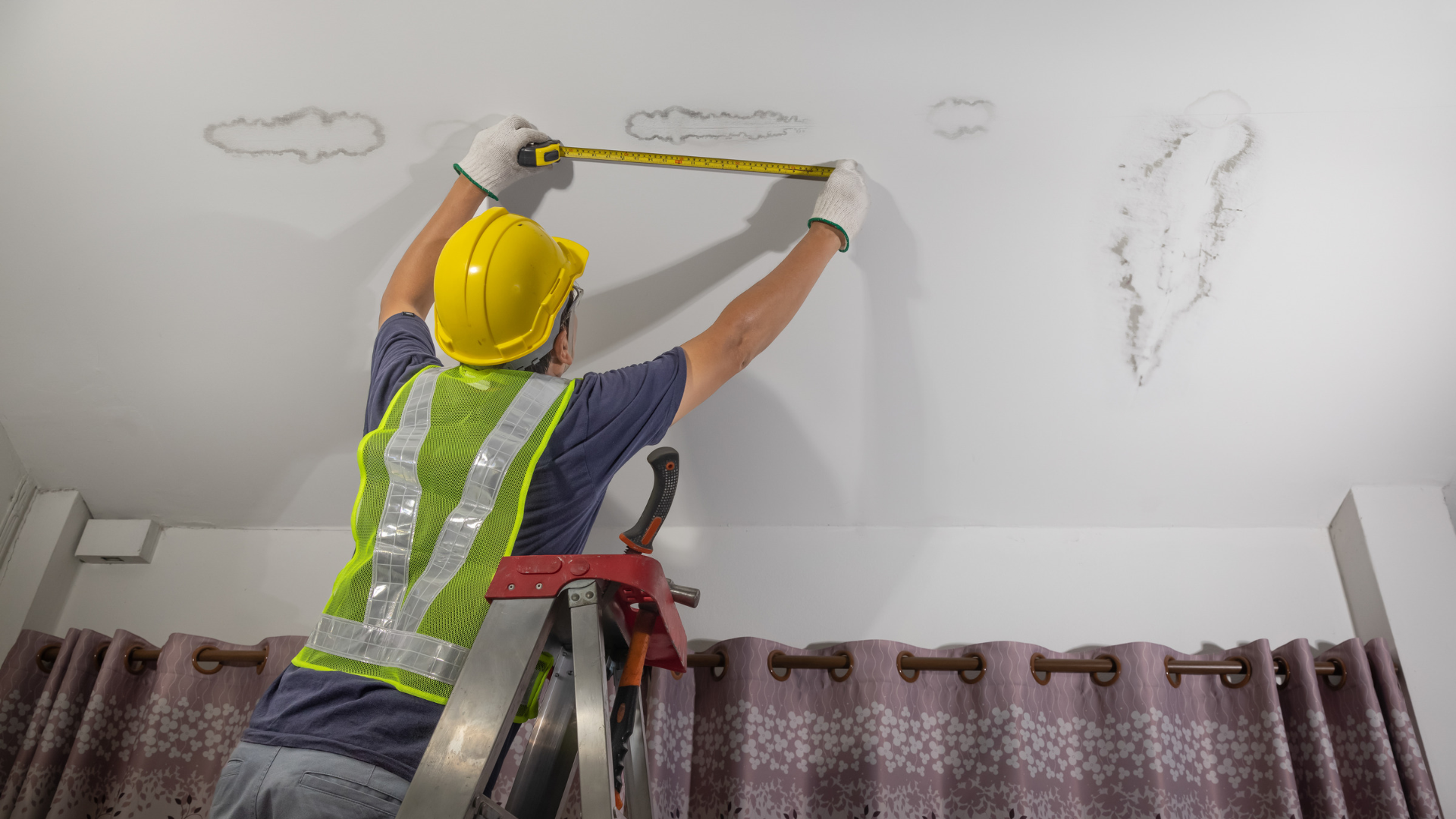
Asphalt shingles rely on overlaps, correct fastening, and sealed tabs to move water. A protected nail can rise into the covering shingle until it creates a crack or hole. Water may follow the shaft into the deck or travel across underlayment to a lower opening. A ceiling stain can therefore appear away from the original nail.
The leak may remain intermittent. Wind, rainfall, roof temperature, and shingle lift determine whether water reaches the opening. Madison, Guilford, Branford, Clinton, and New Haven roofs face different wind, tree, design, and decking conditions, but the principle remains. Exposed roofing nails and lifted roof shingles must be evaluated with the surrounding assembly, not as isolated dots.
| Visible or interior clue | Possible nail-related condition | What the inspection should confirm |
|---|---|---|
| Small bump beneath a shingle course | Underdriven or backed-out fastener | Whether the upper shingle is cracked or punctured |
| Rust mark or exposed nail head | Unprotected fastener or failed prior patch | Whether corrosion, placement, and surrounding material affect repair |
| Shingle tab lifts repeatedly | Loose fastener, broken seal strip, or wind damage | Nail pattern, shingle flexibility, and underlayment condition |
| Ceiling stain appears only in wind-driven rain | Small opening with a directional water path | Roof entry point, underlayment route, and nearby flashing |
| Several pops follow one deck seam | Sheathing movement or fastening problem | Deck condition and whether damage extends beyond one shingle |
| Granules or cracks around a nail head | Mechanical abrasion or puncture | Whether the shingle can be retained or must be replaced |
Warning Signs That Need a Professional Roof Inspection
Inspect from the ground or a safe interior location instead of walking a pitched or wet roof. Binoculars may reveal lifted tabs, uneven lines, exposed fasteners, missing material, or cracked patches. Inside, look for stains, damp accessible decking, wet insulation, rust, or unintended daylight. Record when symptoms appear because wind-driven leaks behave differently from leaks in every storm.
One nail pop does not mean the entire roof failed, but a pattern deserves broader evaluation. Multiple raised fasteners can indicate nailing errors, aged shingles, or decking that cannot hold nails. GAF’s common roofing errors include exposed, underdriven, overdriven, and high nails. Active water, exposed decking, or a loose section warrants faster roof leak repair or emergency attention.
Call for an inspection when you notice:
- A nail head visible in the main shingle field.
- A raised bump that is splitting the shingle above it.
- Several lifted tabs along one line or roof section.
- New attic dampness or ceiling staining after rain.
- Rust streaks, cracked roof cement, or repeat patch failure.
- Shingles moving during wind or no longer lying flat afterward.
- Soft decking, sagging, or water near electrical fixtures.
A Decision Framework for Nail-Pop and Shingle Repair
The decision begins with damage extent, not the number of visible nail heads. One backed-out fastener beneath serviceable shingles may allow localized repair if the deck holds a replacement. A punctured, creased, torn, or brittle shingle should be replaced. If pops cover multiple slopes or decking is weak, the scope must address the pattern.
Roof Repair Pro uses targeted repairs when the surrounding roof remains serviceable. Its shingle repair process checks the roof, affected underlayment, decking, flashing, and penetrations. That separates a legitimate roof nail pop repair from wider installation or aging problems. The scope should identify damaged courses, fastening correction, replacement shingles, and substrate work.
| Inspection finding | Likely repair direction | Decision check |
|---|---|---|
| One raised nail, intact shingle, solid deck | Remove or correctly reset the fastening detail and restore the shingle system | Can the repair be made without leaving an exposed fastener or damaged seal? |
| Nail has punctured the overlying shingle | Replace the damaged shingle and correct fastening beneath it | Does the underlayment or deck show moisture damage? |
| Lifted tab is creased or torn | Replace affected shingles and restore the course | Are nearby tabs also loose or incorrectly nailed? |
| Several pops align with a deck seam | Inspect and repair the substrate before refastening | Will the deck hold nails reliably after the repair? |
| Repeated failures across multiple slopes | Evaluate installation pattern and remaining roof condition | Is targeted repair still durable and economical? |
| Interior damage is present | Stop the roof entry and assess wet materials below | Does the scope include underlayment, decking, insulation, or finish damage? |
What Proper Roof Nail Pop Repair Involves
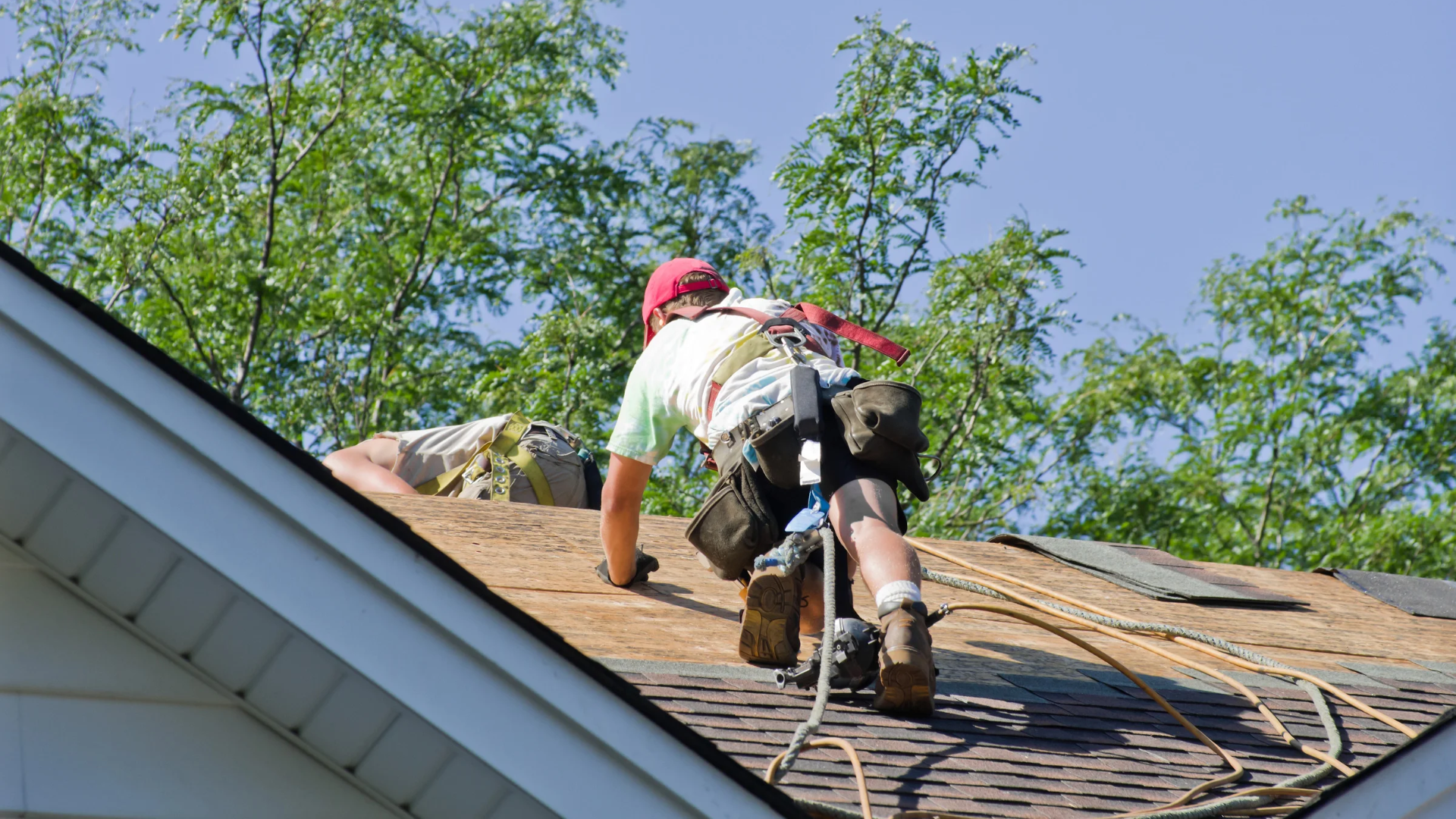
A durable repair preserves the shingles’ water-shedding pattern. The roofer releases the tab, removes the loose fastener, and checks whether it entered sound decking. A replacement is installed in the required location rather than a hole that no longer holds. Damaged shingles are replaced and surrounding tabs resealed with compatible materials.
Hammering the nail flat can leave it loose, while general-purpose caulk offers temporary protection. The shingle above also needs inspection because the nail may have punctured its underside. Roof Repair Pro’s shingle repair service integrates replacements into surrounding courses and checks the deck and underlayment. The result should lie flat, drain correctly, and avoid unnecessary exposed fasteners.
A complete repair may include:
- Photographing the affected area and nearby fastening pattern.
- Releasing shingles without tearing serviceable material.
- Removing the raised or incorrectly placed nail.
- Checking the decking for softness, delamination, or loss of holding power.
- Installing the correct fastener in the proper nailing zone.
- Replacing punctured, torn, brittle, or creased shingles.
- Resealing lifted tabs according to compatible material requirements.
- Checking nearby flashing and penetrations for a second leak path.
How to Reduce the Chance of Repeat Nail Pops
Prevention begins with correct installation and sound decking. Fasteners should match manufacturer requirements for size, corrosion resistance, placement, count, and penetration. Nail heads must sit flush rather than high or through the mat. The deck should be dry, stable, and able to hold fasteners.
Observe existing roofs after major wind and seasonal changes. Look from the ground for raised tabs, compare stains with rainfall, and address attic moisture conditions. Do not add face nails or roof cement because an improvised repair can create another penetration. A repair-focused roof inspection can determine whether the issue is isolated or part of a larger pattern.
Homeowners can help by:
- Photographing visible changes from the same safe ground location.
- Checking accessible attic areas after heavy wind-driven rain.
- Scheduling inspection of lifted shingles before repeated storms.
- Keeping branches from scraping or striking the roof where practical.
- Avoiding roof walking, pressure washing, and DIY face-nailing.
- Retaining installation documents and shingle product information when available.
What Roof Nail Pop and Shingle Repair May Cost
Repair pricing depends on access, slope, shingle condition, material matching, the number of affected courses, and what is found beneath them. One accessible nail pop with flexible shingles differs from a cluster of failures above wet underlayment or weak decking. The estimate should state whether it includes shingle replacement, fastening correction, seal-strip work, underlayment, decking, disposal, and interior protection. Comparing only a price without comparing scope can make a temporary patch look equivalent to a proper repair.
Roof Repair Pro’s published shingle service page says most asphalt shingle repair jobs on the CT Shoreline run from $400 to $900, depending on affected shingles, roof section, and any underlayment or decking repair. That is the company’s stated planning range, not a guaranteed price for every nail-pop project. The other figures below are 2026 national market context from HomeGuide and are not Roof Repair Pro prices. A free inspection and written quote determine the actual scope before work begins.
Estimated 2026 Market Context
| Work category | Published planning range | Source and limits |
|---|---|---|
| Typical Roof Repair Pro asphalt-shingle repair | $400–$900 | Company-published CT Shoreline range; final quote depends on inspected scope |
| Asphalt-shingle repair | $350–$1,500 | HomeGuide national average |
| Replace 3 to 25 broken or missing shingles | $100–$300 | HomeGuide national range; access and call-out minimums may apply |
| Replace damaged shingles over 100 square feet | $200–$600 | HomeGuide national range; hidden substrate work may add cost |
| Asphalt roof leak repair | $350–$1,000 | HomeGuide national average based on cause and severity |
| Water damage or structural repair | $200–$1,500+ | HomeGuide market context; extensive conditions may exceed the range |
Get a Clear Repair Plan for Raised Roofing Nails
Roof nail pops deserve more than a quick surface patch because the visible fastener may be only one part of the failure. Roof Repair Pro checks the nail pattern, overlying shingle, seal strip, underlayment, decking, and nearby leak paths before recommending work. If the problem is localized, our shingle roof repair restores the damaged courses without disturbing the rest of a serviceable roof. You receive photos, a clear explanation, and a written quote before the repair begins.
If you have raised nails, lifted shingles, or unexplained ceiling stains in Madison, Guilford, Branford, Clinton, or New Haven, schedule a free inspection. Call (475) 800-8876 to speak with Roof Repair Pro about the roof condition and recent weather pattern. Active leakage or exposed roofing should be reported promptly so immediate protection can be discussed. Addressing a small fastening defect now can prevent repeated rain from turning it into underlayment, decking, or interior damage.
Related Services & Pages