Why Small Flat Roof Membrane Problems Should Be Repaired Before Connecticut’s First Freeze
A small opening in an EPDM or TPO roof can be easy to postpone when the interior is still dry. The membrane may have one loose seam, a puncture near a walkway, or a flashing edge that has started to pull away. Yet flat and low-slope roofs drain more slowly than steep roofs, so water can remain near that weak point long enough to work beneath the surface.
As September gives way to October, a repair window can narrow quickly. Repeated rain can wet insulation or decking before colder nights arrive, and trapped water can freeze once the surface reaches the freezing point. The safest plan is to find the defect, confirm the membrane type, and make a compatible repair while conditions support proper preparation and bonding.
Roof Repair Pro provides flat roof repair on the CT Shoreline for residential low-slope sections and appropriate commercial properties. We repair EPDM rubber roofing, TPO membrane systems, and modified bitumen in New Haven, Branford, Guilford, Madison, and nearby communities. Here is why seemingly minor membrane problems deserve attention before winter weather begins.
Why the First Freeze Raises the Stakes for a Small Defect
A freeze does not create every membrane problem, but it can expose and enlarge one that already exists. Water may enter an open seam or puncture, move into a small void, and remain there after the surface looks dry. When that moisture freezes, it expands. Repeated temperature swings can stress an edge, old patch, flashing termination, or damp substrate.
The National Weather Service defines a freeze as a widespread surface-air temperature of 32°F or below for a meaningful period. The exact date varies, and a roof surface can cool differently from the official air reading. Homeowners do not need to predict the first freezing night. They need enough lead time for inspection, dry preparation, and a repair suited to the existing system.
Cold also affects the repair process. Membrane manufacturers specify compatible cleaners, primers, adhesives, tapes, and welding procedures, and those products have application requirements. Waiting until the roof is wet, icy, or consistently cold can limit safe access and workable conditions.
The goal is not to beat a date on the calendar. It is to repair a known opening before water and temperature cycling turn it into a larger assembly problem.
How EPDM and TPO Roof Systems Keep Water Out
EPDM and TPO are both single-ply membranes, but they are different materials with different repair methods.
EPDM is a synthetic rubber membrane commonly used on residential additions, garages, porches, and commercial buildings. Sheets may be fully adhered, mechanically fastened, or ballasted. Seams and many details are joined with primers, tapes, adhesives, and compatible flashing products. The membrane remains flexible, but punctures, shrinkage, open laps, and stressed perimeter details can still create leaks.
TPO is a thermoplastic membrane used on residential and commercial low-slope roofs. Its field seams are typically joined with hot-air welding. GAF's technical information on TPO membranes highlights heat-welded seam strength and the material's repairability. Those advantages depend on correct identification, cleaning, welding, and compatible detailing.
| Roof system | Common localized problems | Typical repair principle |
|---|---|---|
| EPDM rubber | Punctures, open seams, shrinkage, edge or penetration failure | Prepare the rubber and use compatible primer, tape, membrane, or flashing materials |
| TPO | Punctures, deficient welds, split details, loose flashing terminations | Clean and prepare the surface, then use compatible heat-welded membrane detailing |
| Modified bitumen | Cracks, blisters, splits, open laps, flashing failure | Use a compatible asphalt-based repair method suited to the existing assembly |
Material identification comes first. A generic coating or patch that does not bond correctly can hide the opening temporarily, complicate the next repair, and release when exposed to standing water or temperature changes.
How Punctures and Open Seams Become Flat Roof Leaks
A membrane puncture may begin as a pinhole from dropped hardware, a sharp branch, foot traffic, or work by another trade. Seam trouble may start with a small unbonded edge or contamination that prevented a complete bond. At a penetration or curb, movement can stress the flashing where horizontal and vertical surfaces meet.
Water does not need a large hole. Once it passes the membrane, it can spread laterally through cover board, insulation, or gaps in the assembly. The indoor stain may appear several feet from the breach. If the insulation absorbs water, the affected area can be much larger than the opening visible at the surface.
Carlisle SynTec's guidance on test welds and seam probing explains that seam deficiencies should be repaired promptly using the appropriate heat-welded procedure. Although that guidance is written for professional membrane installation, the principle applies to existing roofs: a questionable seam needs evaluation, not an improvised surface smear.
The same caution applies to EPDM roof repair. Cleanliness, compatible materials, preparation, and pressure all affect how a repair bonds. If moisture is trapped below the membrane or the surrounding material has deteriorated, a patch alone may not address the full scope.
Why Ponding Water and Blocked Drainage Matter
Flat roofs are not truly level. They should have enough slope and functioning drainage to move water toward drains, scuppers, gutters, or edges. A shallow puddle immediately after rain is different from water that remains because a drain is clogged, insulation has compressed, or the deck has deflected.
Standing water can:
- Keep seams and old repairs wet for extended periods
- Collect sediment and organic debris near drains
- Add weight to an already deflected area
- Make a tiny puncture harder to locate
- Freeze around a seam, edge, drain, or flashing detail
- Conceal surface deterioration until the water recedes
Clearing loose leaves from an accessible drain may be maintenance. Recurring ponding is a condition to diagnose. The cause could involve debris, drainage design, displaced insulation, deck movement, or a low area that requires more than membrane patching.
Drainage concerns can differ by property without needing a separate city-by-city rule. Tree cover around a residential addition in Madison or Guilford may contribute leaves and small branches. A larger roof in New Haven may rely on internal drains or scuppers. Wind exposure in Branford can move debris to corners and perimeter details. The repair recommendation should follow the water path, roof construction, and documented condition, not the municipality alone.
Warning Signs on the Roof and Inside the Building
An active drip is only one sign of membrane failure. Some defects appear first as changes in the roof surface or as dampness that comes and goes with wind direction and rainfall duration.
Surface signs include open seam edges, punctures, cuts, blisters, wrinkles, loose perimeter membrane, cracked sealant, deteriorated flashing, backed-up drains, and older patches lifting at their edges. On TPO, a questionable seam may not be obvious without close inspection. On EPDM, shrinkage can pull against walls, curbs, and penetrations.
Inside, watch for:
- Ceiling stains that grow after long-duration rain
- Damp insulation or decking visible from below
- Musty odors in an addition, garage, or top-floor space
- Bubbling paint or discolored wall finishes
- Drips near roof drains, pipes, curbs, or transitions
- A recurring stain that appears away from the suspected opening
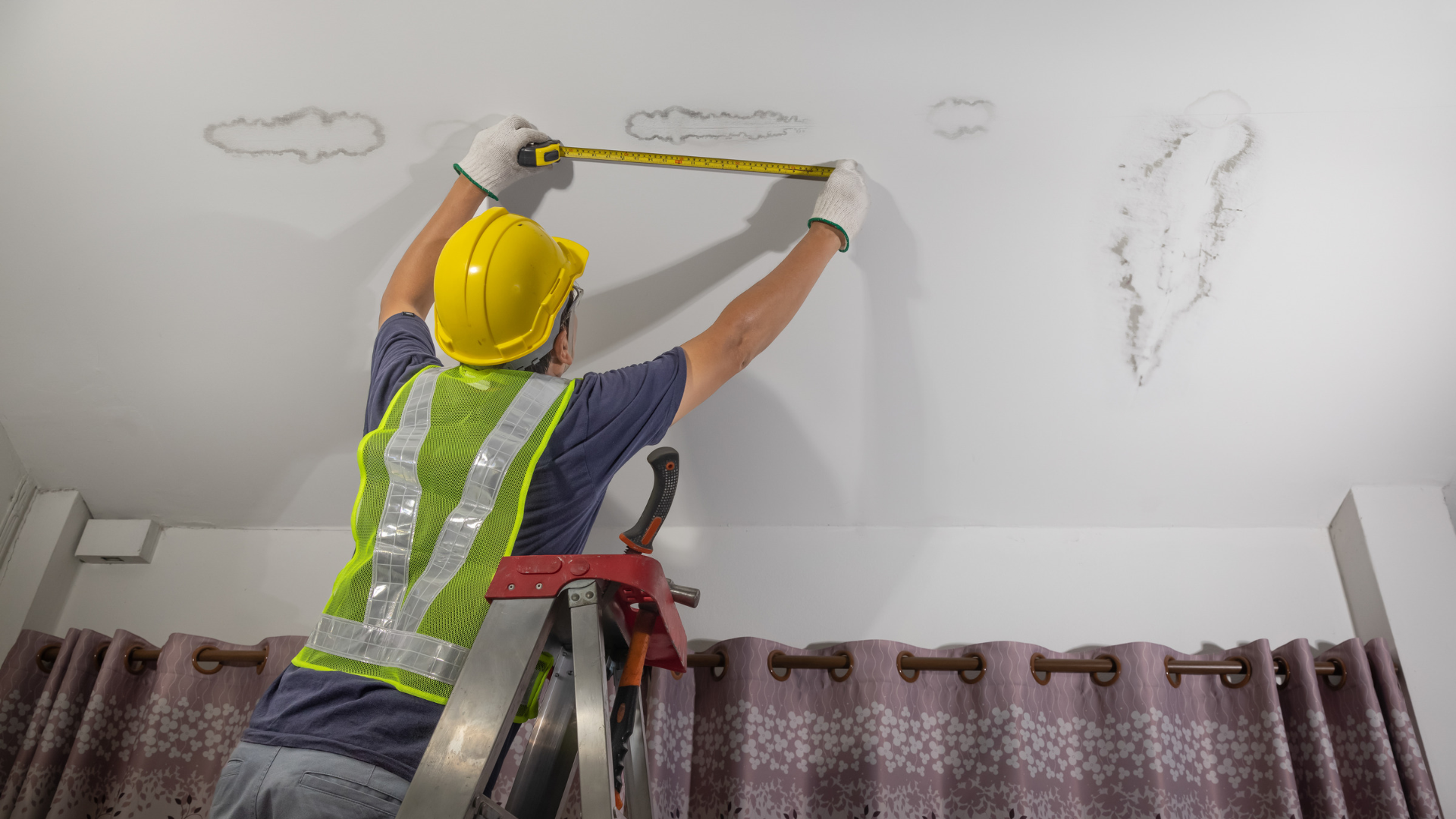
Do not assume a dry ceiling proves the membrane is sound. Water may be held in insulation or stopped temporarily by another layer. Conversely, condensation from indoor humidity or mechanical equipment can resemble a roof leak. A good inspection compares interior evidence with seams, penetrations, edges, drainage points, and the overall membrane condition.
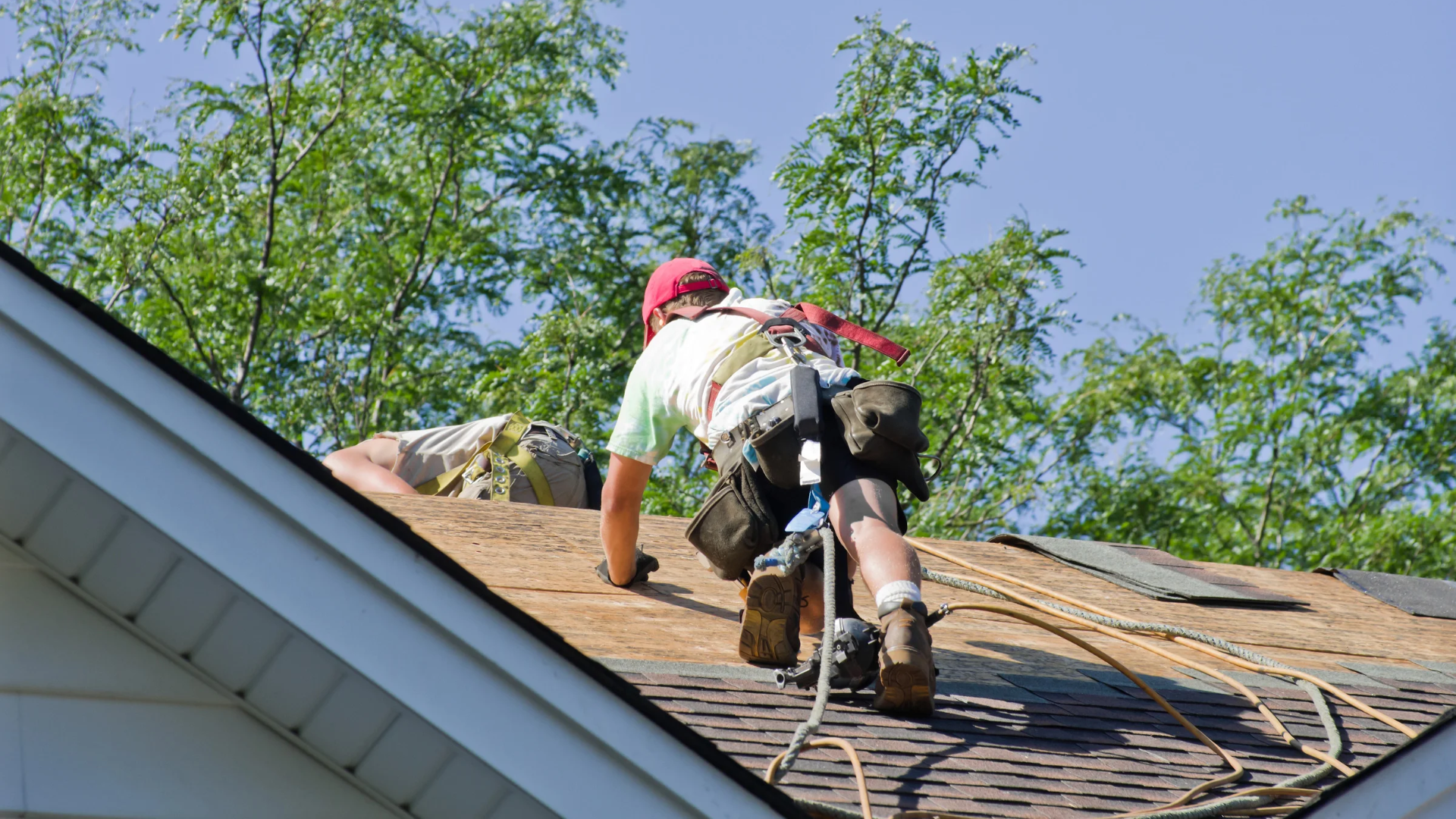
Avoid walking an unfamiliar flat roof, particularly when it is wet, frosted, or covered with debris. Membrane surfaces can be slippery, and foot traffic can worsen a soft or concealed damaged area.
How EPDM Repair Differs From TPO Repair
The repair goal is the same for both systems: remove or isolate compromised material, prepare a clean and dry surface, and restore a continuous waterproof layer. The tools and chemistry are not interchangeable.
EPDM Roof Repair
An EPDM repair may use compatible cured or uncured membrane, flashing material, seam tape, primer, adhesive, and lap sealant depending on the location and system. The technician must clean the rubber, identify contamination or oxidation, round patch corners where appropriate, and apply pressure according to the product procedure. A puncture at an open field area is not repaired the same way as shrinkage at a perimeter or failure around a pipe.
Carlisle publishes EPDM restoration details for existing roof systems, including repairs at drains, scuppers, and pipe flashings. Manufacturer-specific details reinforce why the existing membrane and failure location must be identified before materials are selected.
TPO Roof Repair
TPO roof repair generally relies on compatible thermoplastic membrane and controlled hot-air welding. The surface must be clean enough for the new material to weld to the existing membrane. Aging, contamination, weather, temperature, and access can affect preparation and testing. Flashing at corners, curbs, penetrations, and transitions requires particular attention because material changes direction there.
A tube of general-purpose sealant is not a substitute for membrane seam repair. Sealants may be part of an approved detail, but the core repair must match the roof system and failure. Roof Repair Pro identifies the membrane first and uses a repair approach that bonds correctly to it.
What a Professional Membrane Inspection and Repair Should Include
Flat roof leak repair begins with more than locating the wet spot indoors. The technician should understand the roof layout, drainage, age, visible repairs, penetrations, edge conditions, and where water could travel beneath the surface.
A focused inspection commonly includes:
- Mapping the interior stain or damp area relative to the roof above
- Identifying whether the system is EPDM, TPO, or modified bitumen
- Checking seams, penetrations, drains, scuppers, curbs, and perimeter flashing
- Looking for punctures, wrinkles, splits, open edges, and stressed details
- Evaluating ponding areas and signs of trapped moisture
- Defining whether the failure is localized or part of broader deterioration
The written scope should state what will be cleaned, opened, removed, patched, welded, flashed, or replaced. It should also explain how concealed wet materials will be handled if discovered. Photos before and after the repair help property owners understand the exact work and maintain useful records.
At Roof Repair Pro, we work on residential flat sections over additions, garages, sunrooms, and porches, along with appropriate commercial EPDM, TPO, and modified bitumen systems. We are a repair-only company, so the recommendation stays focused on diagnosing the failure and determining whether a lasting localized repair is practical.
What Flat Roof Membrane Repair May Cost
The size of a puncture does not determine price by itself. A small open seam near an accessible edge may be straightforward. A similar-looking leak near a curb, wall, drain, or wet insulation may require a larger repair area and more detailed work.
Estimated 2026 Market Context
Roof Repair Pro publishes the following typical pricing for its CT Shoreline work. The final written quote reflects the inspected roof, system type, access, and repair scope.
| Repair category | Roof Repair Pro's published typical range | Important scope factors |
|---|---|---|
| Residential flat roof repair | $400–$1,500 | Membrane type, failure extent, access, seams, penetrations, and materials below |
| Most residential roof repairs overall | $250–$1,500 | Roof type, pitch, materials, access, and damage extent |
| Commercial flat roof repair | Quoted by scope | Roof size, system type, access, affected assembly, and operational needs |
An estimate should identify the membrane and describe the repair detail rather than promise a generic patch. Ask whether the price includes surface preparation, compatible materials, work around nearby flashing, and investigation of damaged substrate where indicated. If one quote is much lower, compare what each contractor will actually remove, repair, document, and test.
Roof Repair Pro provides free estimates and a written quote before work begins. If the inspected job falls outside a typical published range, we explain that before the repair is approved.
Repair the Membrane While the Problem Is Still Localized
A small seam opening or puncture is usually a better repair project before it has admitted water through several storms. Once insulation, cover board, or decking becomes wet, the visible defect may represent only one part of the work. Cold and ice can also make inspection, preparation, and safe access more difficult.
If you see an open seam, lifted patch, puncture, recurring puddle, or unexplained top-floor stain, Roof Repair Pro can inspect the full membrane system and trace the water path. We serve residential and appropriate commercial properties across the CT Shoreline, including New Haven, Branford, Guilford, and Madison. Call (475) 800-8876 or schedule a free inspection to receive photos, a clear repair recommendation, and a written quote.
Related Services & Pages