How Small Shingle and Flashing Problems Turn Into Fall Roof Leaks on the Connecticut Shoreline
A lifted shingle, a narrow gap beside a chimney, or a cracked pipe boot can look insignificant from the ground. Once wind-driven rain reaches that opening, however, water can move beneath the visible roof surface and appear indoors far from where it entered. As September shifts into October, that small defect may face repeated rain, falling debris, stronger coastal wind, and colder nights before a homeowner knows there is a problem.
For homeowners searching for shingle roof repair on the CT Shoreline, the useful question is not simply whether the roof is leaking. It is which component failed, how far water has traveled, and whether the damage is still localized. A precise repair can often restore an otherwise serviceable roof without turning a limited problem into a larger project.
Roof Repair Pro diagnoses and repairs existing roof systems in Madison, Guilford, Branford, New Haven, and nearby shoreline communities. Here is how small shingle and flashing defects develop into fall leaks, what to watch for, and what a lasting repair should address.
Why Small Roof Defects Become Bigger Problems in Fall
An asphalt roof is a layered water-shedding system. Shingles form the visible surface, but underlayment, flashing, drip edge, fasteners, seal strips, and the roof deck all contribute to keeping water outside. One damaged piece does not automatically mean the entire system has failed. It does mean the surrounding layers may be doing more work than intended.
Fall conditions make that weakness easier to expose. Wind can lift a shingle whose factory seal has already broken. Rain can enter a flashing joint that opened during summer heat. Leaves and twigs can slow drainage in a valley, behind a chimney, or near a roof-to-wall transition. Cooler temperatures can also make older roofing materials less flexible.
Connecticut shoreline properties may experience rain arriving at an angle rather than falling straight down. The National Weather Service explains that nor'easters are most frequent and most violent from fall through early spring. That does not mean every storm will damage a roof. It does mean a small opening that stayed dry during a gentle shower may leak when wind pushes water beneath an edge or against a vertical transition.
The practical takeaway is simple: small defects matter because they interrupt the way the whole assembly manages water. Correcting the entry point early usually involves less disruption than waiting until wet decking, insulation, ceilings, or walls also need attention.
How Damaged Shingles Allow Water Below the Surface
Asphalt shingles are installed in overlapping courses. Water should flow from one course to the next and leave the roof without reaching nail heads or the underlayment. Damage changes that path.
A missing shingle creates an obvious exposed area, but other defects are subtler. A lifted tab may settle back down after a windy day even though its seal strip no longer bonds reliably. A crease can split the reinforcement inside a shingle. A crack, displaced edge, or improperly driven nail can create a route for water that is difficult to see from the yard.
Common conditions that justify closer inspection include:
- Lifted or fluttering tabs after gusty weather
- Creased shingles that have folded and settled back down
- Missing shingles or exposed fasteners
- Cracks, tears, or punctures from limbs and foot traffic
- Localized granule loss around an impact point
- Shingles that have slipped out of alignment
The U.S. Department of Energy's Building America Solution Center guidance for asphalt shingle roofs emphasizes proper securement, underlayment, and roof-edge detailing because wind resistance depends on more than the visible shingle surface. When wind damaged shingles break their seal or pull against fasteners, the next rain can reach layers that were not designed to remain exposed.
Water may then move downslope over the underlayment, enter at a nail hole, or collect where the underlayment is aged or interrupted. The ceiling stain can appear below that secondary entry point rather than directly below the damaged shingle. That is why replacing the most visible shingle without tracing the moisture path can leave a leaking roof unresolved.
Why Flashing Is Often the Actual Leak Source
Flashing protects the places where a roof changes direction or meets another material. These areas include chimneys, dormers, sidewalls, valleys, skylights, plumbing pipes, vents, and roof edges. Even when the surrounding shingles look sound, a flashing defect can direct water beneath them.
Step flashing is installed in overlapping pieces along a roof-to-wall joint. Counterflashing covers the upper edge at masonry. Pipe boots form a seal around plumbing vents. Apron and back-pan flashing move water around chimneys, while valley flashing manages concentrated runoff between roof planes. Each detail must overlap the next one in the correct direction.
The Department of Energy's step and kick-out flashing guidance explains that these components should divert runoff away from roof-wall intersections and into drainage. It also notes that missing or inadequate details can allow hidden water damage even when exterior signs are limited.
Typical flashing failure modes include:
- Metal that has lifted, shifted, bent, or corroded
- Counterflashing that has separated from a masonry joint
- Step flashing that was underlapped or omitted
- A rubber pipe collar that has split around the vent
- Cracked sealant at a termination or exposed fastener
- A missing kick-out detail that sends runoff behind siding
A bead of caulk may slow water briefly, but it does not rebuild a failed overlap. Flashing leak repair should restore the drainage detail, which may require lifting nearby shingles, replacing damaged metal or a boot, integrating the layers correctly, and repairing affected decking.
Warning Signs That Deserve a Closer Look
Some roof problems announce themselves with an active drip. Many begin with inconsistent signs that appear only during a certain wind direction or after several hours of rain. Treating those clues as diagnostic information can help narrow the source.
| What you notice | What it may indicate | Why the source still needs confirmation |
|---|---|---|
| Ceiling stain near a chimney | Step flashing, counterflashing, surrounding shingles, or a chimney-top issue | Water can run along framing before appearing indoors |
| Damp wall below a roof-to-wall joint | Failed step or kick-out flashing | The exterior opening may be above or beside the visible stain |
| Shingle pieces in the yard | Wind damaged shingles | Other tabs may be creased or unsealed without being missing |
| Water around a vent or pipe | Cracked boot, pipe flashing, or nearby fastener | Condensation and plumbing issues can create similar symptoms |
| Granules in gutters | Normal aging or accelerated surface wear | Granules alone do not identify a specific leak point |
| Drip that occurs only in wind-driven rain | Lifted edge, flashing gap, or penetration defect | Gentle rain may not reproduce the same water path |
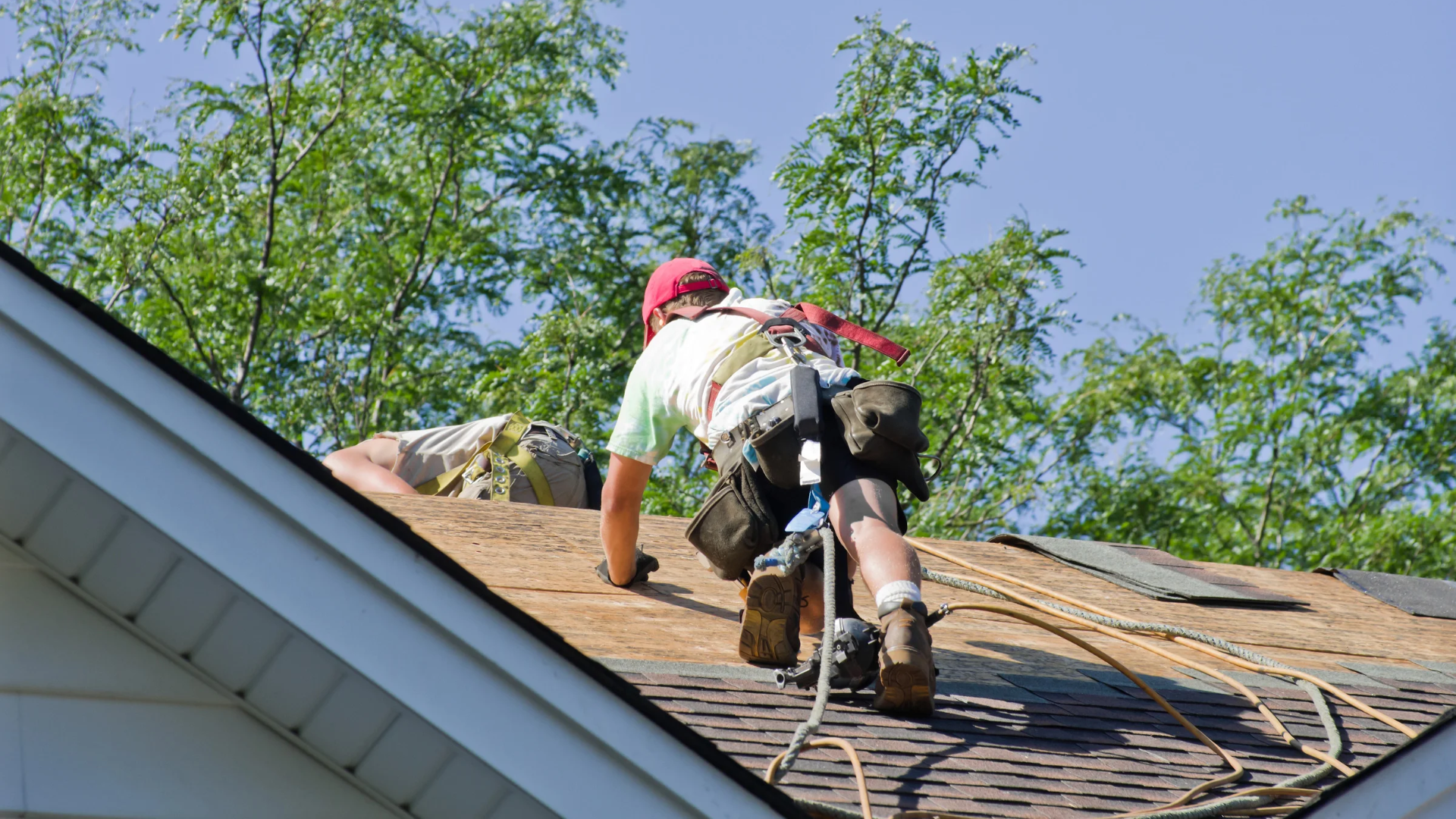
From inside, look for discolored drywall, peeling paint, damp insulation, musty odors, or darkened roof sheathing in an accessible attic. From the ground, binoculars may reveal missing tabs, a branch impact, displaced metal, or debris in a valley. Do not walk a wet, steep, or unfamiliar roof to investigate. A professional can inspect the surface, transitions, and interior evidence without creating new damage or risking a fall.
How Wind, Debris, and Drainage Compound Existing Damage
Wind does not need to remove a whole shingle to create trouble. Repeated uplift can weaken a seal, enlarge a tear around a fastener, or bend flashing away from the surface. Once the edge is open, wind-driven rain can travel against the roof's normal drainage direction.
Debris adds a different kind of pressure. Leaves can hold moisture against a valley or collect behind a chimney. A small branch can puncture a shingle, scuff away granules, or bend a flashing edge. Gutters packed with leaves can overflow at the eave, making it harder to distinguish a roof leak from water entering behind fascia or trim.
These interactions vary naturally across the shoreline. A tree-covered street in Guilford or Madison may produce more roof and gutter debris. An exposed property in Branford may see stronger wind across open water. Dense New Haven neighborhoods can include older roof transitions, additions, chimneys, and sidewalls that deserve careful inspection. The town name does not determine the repair, but exposure, roof geometry, drainage, and documented condition do.
After a storm, a safe ground-level check can identify obvious changes. Compare current photos with earlier ones if possible. If shingles are missing, metal has shifted, or water is actively entering, move valuables away from the affected area and call for an inspection. Emergency stabilization may be appropriate when permanent work cannot be completed safely during the weather event.
Why the Interior Stain May Not Be Below the Roof Opening
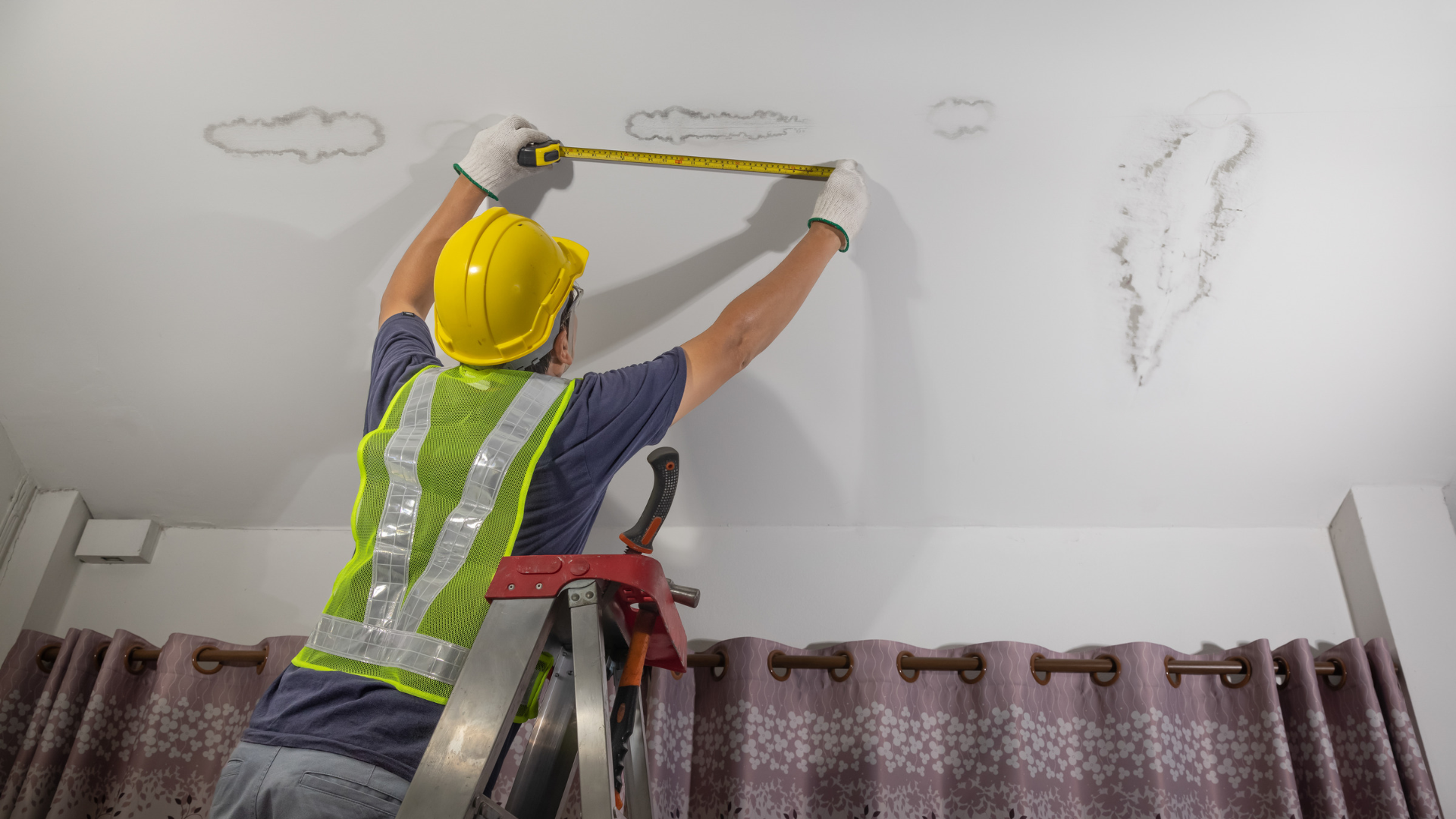
Water follows gravity, but it also follows materials. After entering beneath a shingle or flashing joint, it can move along underlayment, roof decking, rafters, nails, pipes, wiring, or insulation. It may travel several feet before reaching a joint or low point where it finally drips.
That behavior explains several confusing situations:
- A stain near a chimney does not prove the chimney flashing is the only cause.
- A drip below a valley may originate higher on an adjacent roof plane.
- Water near a skylight may enter through nearby shingles or flashing, not the unit itself.
- An attic can be wet while the finished ceiling below still looks normal.
- One visible stain can result from more than one small opening.
Leak diagnosis should begin with the indoor pattern, then move to the roof surface. The inspector should compare the stain's position with slopes, penetrations, valleys, and wall intersections above it. Moisture staining on sheathing and fasteners can provide additional clues.
At Roof Repair Pro, we inspect the affected area and the surrounding system because the goal is to identify the entry point, not simply cover the symptom. That distinction is especially important for intermittent leaks that occur only during heavy or wind-driven rain.
What a Lasting Shingle or Flashing Repair Should Include
A durable repair starts with a defined scope. The contractor should document what failed, explain whether nearby components remain serviceable, and identify any hidden work that may become necessary once the area is opened.
For shingle roof repair, the work may include removing damaged shingles, checking the exposed underlayment and decking, replacing softened decking when needed, and integrating compatible shingles into the existing courses. The nail placement and seal must allow the repaired section to shed water and resist wind. A color match may be close rather than exact because existing shingles have weathered and some products are discontinued.
For roof flashing repair on the CT Shoreline, the correct method depends on the component. Step flashing may require carefully lifting adjacent shingles. Counterflashing may need to be reset into masonry. A cracked pipe boot may require replacement rather than another surface coating. Valley work must preserve a clear, correctly layered drainage path.
Before approving a scope, ask whether it includes:
- Photos of the failure and surrounding roof area
- Removal of compromised materials rather than a surface-only cover
- Inspection of underlayment and accessible decking
- Materials compatible with the existing roof system
- Replacement of shingles disturbed during flashing work
- Cleanup and completed-work documentation
Roof Repair Pro focuses exclusively on repair and provides a written quote before work begins. Most localized residential repairs can be completed in one visit, although access, weather, material availability, and concealed decking damage can affect the schedule.
What Shingle and Flashing Repairs May Cost
Cost depends on more than the size of the visible defect. A single failed pipe boot on an accessible roof is different from rebuilding chimney flashing on a steep roof with wet decking below it. The number of affected shingles, roof pitch, material matching, access, and the layers involved all shape the scope.
Estimated 2026 Market Context
Roof Repair Pro publishes the following typical ranges for its CT Shoreline repair work. These are useful planning figures, and the written quote for the inspected scope is the number that governs the job.
| Repair category | Roof Repair Pro's published typical range | Factors that can change the scope |
|---|---|---|
| Asphalt shingle repair | $400–$900 | Number of shingles, roof section, matching materials, underlayment, and decking |
| Roof flashing repair | $350–$1,200 | Flashing type, access, adjacent roofing, and hidden moisture damage |
| Most residential roof repairs overall | $250–$1,500 | Roof type, pitch, materials, access, and extent of damage |
A low price based only on a phone description may exclude the work needed beneath the visible surface. A useful estimate should identify the failed component, describe how the repair integrates with adjacent materials, and address what happens if damaged decking is found. Compare scopes, not just totals.
Repair the Entry Point Before Fall Weather Compounds It
Small shingle and flashing defects are often repairable. The expensive part is usually what happens when water continues past them unnoticed. Wet decking, compressed insulation, damaged drywall, and concealed wall moisture can turn a focused exterior repair into a broader restoration project.
If you have damaged shingles, a stain near a chimney or wall, or a leak that appears only in hard rain, Roof Repair Pro can trace the water path and define the repair that the roof actually needs. We serve homeowners and appropriate commercial properties across the CT Shoreline, including Madison, Guilford, Branford, and New Haven. Call (475) 800-8876 or schedule a free inspection for photos, a clear explanation, and a written quote before work begins.
Related Services & Pages