Shingle Repair vs Flashing Repair: Which Is Actually Causing Your Roof Leak?
A roof leak does not always begin where the water stain appears inside the house. Water can travel along decking, rafters, underlayment, and framing before it finally becomes visible on a ceiling or wall. That is why effective roof leak repair starts with finding the entry point rather than replacing the roofing material closest to the stain.
Roof Repair Pro is a repair-only roofing specialist serving the CT Shoreline, including Madison, Guilford, Branford, and New Haven. We inspect the shingle field, step flashing, sidewall flashing, chimneys, vent boots, valleys, skylights, penetrations, and accessible decking before recommending a repair. If the shingles are intact and the flashing is failing, replacing shingles will not solve the leak, and the reverse is also true.
Why Shingle Leaks and Flashing Leaks Are Easy to Confuse
Shingles and flashing work together as one water-shedding system, so a failure in either component can produce the same indoor symptom. GAF's current roof-leak guidance identifies both aging or cracked shingles and damaged flashing as common leak sources, especially around chimneys, skylights, vents, and roof penetrations. GAF roof leak repair guidance
The difference is where the roof is vulnerable. Shingles protect broad roof planes, while flashing protects transitions, penetrations, edges, and places where one surface meets another. A leak near a dormer wall, chimney, vent, or roof-to-wall transition is therefore more likely to involve flashing than a random shingle in the middle of an open roof field.
Shingle Repair or Flashing Repair? Start With This Comparison
The visible clue matters, but the leak pattern matters even more. A missing shingle after a wind event points toward shingle roof repair, while water entering near a chimney or sidewall may come from failed metal even when the shingles look fine. The table below shows the most common differences we see during CT Shoreline leak inspections.
| What You Notice | Shingle Repair More Likely | Flashing Repair More Likely |
|---|---|---|
| Missing shingles in open roof field | Yes | Usually no |
| Cracked or torn shingles | Yes | Usually no |
| Leak beside chimney | Maybe | Often |
| Leak where roof meets wall | Maybe | Often |
| Leak around plumbing vent | Maybe | Often |
| Bent or loose metal at transition | No | Yes |
| One lifted wind-damaged shingle | Yes | No |
| Repeated leak at dormer | Maybe | Often |
| Roof stain far below penetration | Possible | Possible |
| Shingles look intact around leak | Less likely | More likely |
A visual inspection from the ground cannot always distinguish between the two. Water can enter several feet upslope and travel before it becomes visible indoors. Roof Repair Pro traces that path from the inside and the roof surface before deciding what component actually needs repair.
When Shingle Roof Repair Is the Right Fix
Missing or Blown-Off Shingles
Missing shingles create an obvious weak point because the underlayment and fasteners below are more exposed to wind-driven rain. GAF notes that blown-off shingles can be a sign of wind damage and should be addressed quickly before repeated weather expands the problem. GAF storm-damage guidance
If the surrounding shingles are still serviceable, a localized repair can replace the damaged section without disturbing the rest of the roof. Roof Repair Pro checks the adjacent shingles for brittleness, torn seal strips, creasing, and hidden uplift before installing the replacement. A single missing shingle may be a small repair, but the inspection determines whether the wind affected a larger area.
Cracked, Creased, or Lifted Shingles
A shingle does not need to be completely missing to leak. High winds can crease or lift a tab, while age can make the asphalt brittle enough to crack around fasteners and edges. If the failure is limited to a defined section, targeted shingle replacement can restore the water-shedding surface.
Localized Storm or Impact Damage
Falling branches, wind-driven debris, and hail can damage a small section of the roof while leaving the rest intact. In those cases, the repair should focus on the damaged shingles and any decking or underlayment below them. Roof Repair Pro's storm damage repair service documents what the weather event actually affected before the permanent repair begins.
When Roof Flashing Repair Is the Right Fix
The Leak Is at a Roof-to-Wall Transition
Step flashing is installed in overlapping pieces where a shingle roof meets a vertical wall, including dormers and sidewalls. If those pieces corrode, pull loose, were installed incorrectly, or lose their protective counterflashing, water can slip behind the roof covering. GAF describes flashing as one of the most critical parts of leak prevention and notes that roof-to-wall transitions require properly layered step flashing. GAF flashing guidance
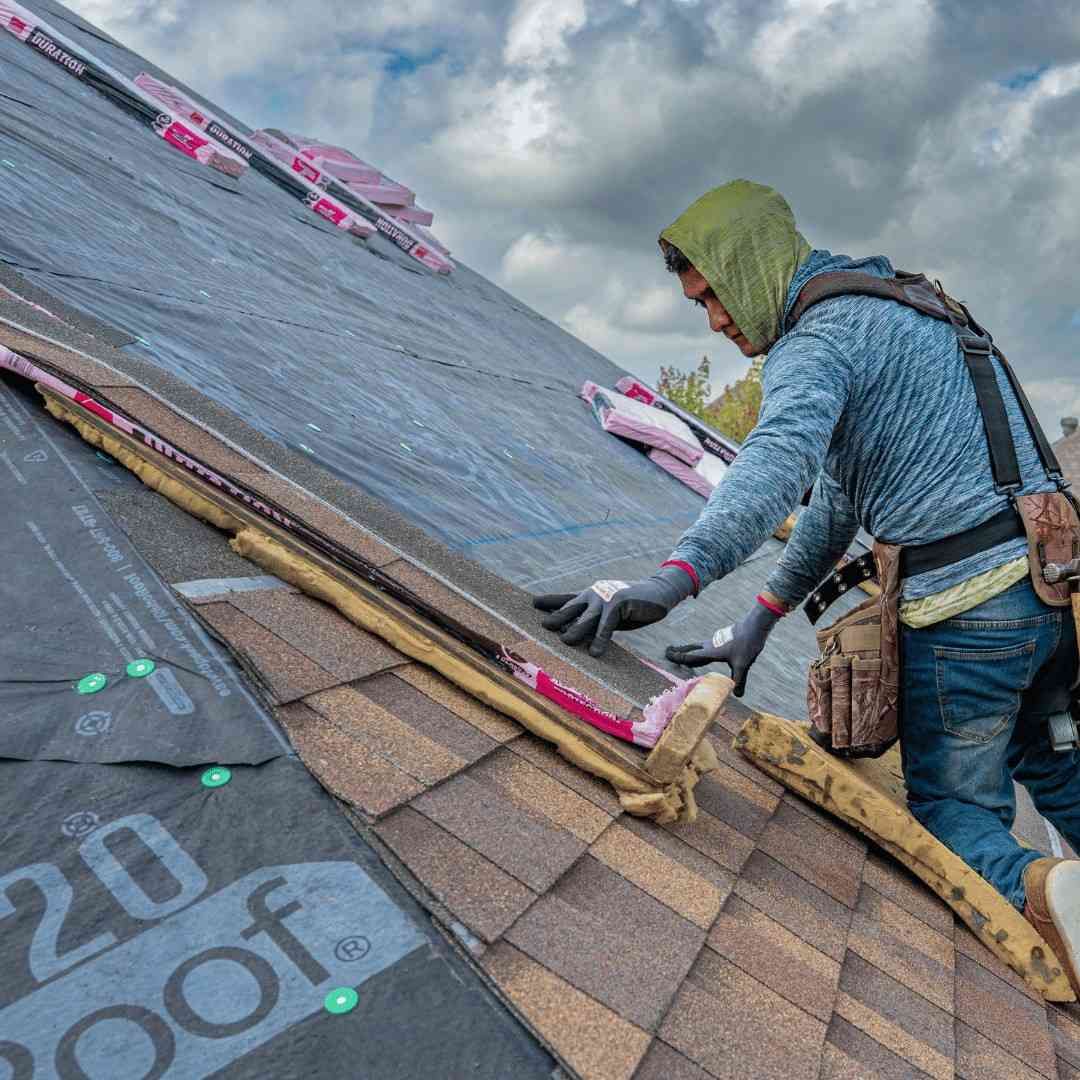
A step flashing repair may require carefully lifting or removing surrounding shingles so the damaged metal can be replaced and relapped correctly. Simply smearing roof cement over the exposed edge is not the same as restoring the flashing system. Roof Repair Pro repairs the transition itself so water is redirected back onto the roof surface.
The Leak Is Around a Chimney
Chimneys use several flashing components, including apron flashing, step flashing, counterflashing, and a back pan or cricket depending on the roof configuration. Water can enter through a failed masonry joint or through metal that has separated even while the adjacent shingles remain intact. Our roof flashing repair service handles the flashing system rather than covering the joint with another temporary bead of sealant.
The Leak Is Around a Vent or Penetration
Plumbing vents, exhaust vents, skylights, and other penetrations interrupt the shingle field and require their own flashing detail. Rubber boots can crack with age, metal bases can corrode, and sealant can separate around fasteners. When the failure is at the penetration, replacing nearby shingles alone does not address the actual opening.
What Step Flashing Failure Looks Like on Older Shoreline Homes
Older homes in Madison, Guilford, Branford, and New Haven often have dormers, sidewalls, chimneys, and additions where several roof transitions meet. Step flashing in these areas may be decades old even when portions of the roof were replaced later. A leak can therefore develop at the transition while the newer shingle field still looks healthy.
Salt exposure on shoreline properties can also accelerate corrosion on older metal flashing and fasteners. Repeated freeze-thaw cycles can open small gaps where metal meets masonry or siding, and wind-driven rain can push water into transitions that do not leak during lighter rainfall. Those patterns make flashing inspection especially important when the leak appears near a wall or penetration.
Caulk Is Not a Substitute for Proper Flashing
Sealant has a place in roof repair, but it should support the flashing system rather than replace it. GAF's flashing guidance emphasizes that proper flashing directs water away from vulnerable transitions through overlapping materials. A surface bead may stop a small opening temporarily, but it does not correct missing, undersized, or improperly layered flashing.
How We Trace a Roof Leak Before Repairing It
Roof Repair Pro begins with the interior evidence, then works upslope and outward on the roof. We look at where the stain appears, what roof feature sits above it, whether the leak happens during every rain or only wind-driven storms, and whether the roof has recent storm damage. That information narrows the search before any material is removed.
We Check the Shingle Field
The inspection looks for missing, cracked, creased, lifted, or improperly sealed shingles and signs of impact damage. We also check whether the surrounding shingles are flexible enough to work with during a localized repair. Brittle shingles can change the scope because lifting them may cause additional damage.
We Check Every Nearby Transition
Chimneys, sidewalls, vent boots, skylights, dormers, valleys, and pipe penetrations are checked even if they are not directly above the interior stain. Water commonly travels beneath roofing before showing itself indoors. That is why the closest visible defect is not always the actual leak source.
How the Diagnosis Changes Across the CT Shoreline
Madison and Guilford
Madison and Guilford have a mix of older colonials, shoreline homes, and newer construction with dormers, chimneys, and complex roof transitions. Salt exposure near the water can accelerate flashing deterioration, while inland tree cover contributes branch and wind damage to shingles. Both components need to be checked rather than assuming the most visible defect caused the leak.
Branford
Branford's shoreline neighborhoods add wind and salt exposure, particularly around Stony Creek, Pine Orchard, and other coastal sections. Flashing at chimneys and roof-to-wall transitions deserves close inspection on older homes, while wind events can also lift shingles along exposed roof planes. A proper diagnosis separates those two failure patterns.
New Haven
New Haven has older two- and three-family homes, colonials, dormers, chimneys, and flat-to-pitched roof transitions that can complicate leak tracing. A ceiling stain in an upper-floor room may originate several feet away at a sidewall or penetration. Roof Repair Pro checks the whole local roof section before deciding whether the repair belongs in the shingle field or the flashing detail.
What Does Shingle or Flashing Roof Leak Repair Cost?
Roof Repair Pro's current local pricing places most residential roof repairs around $250 to $1,500, depending on the material, roof pitch, access, and extent of damage. The company's current flashing guidance places most flashing repairs around $350 to $1,200, with more complex chimney flashing work tending toward the higher end. These are current Roof Repair Pro pricing ranges, not generic national estimates.
| Repair Type or Cost Factor | Current Roof Repair Pro Context |
|---|---|
| Most localized residential roof repairs | $250-$1,500 |
| Typical flashing repair | $350-$1,200 |
| Free roof inspection | $0 |
| Missing-shingle repair | Quoted after inspection |
| Step flashing repair | Depends on wall length and access |
| Chimney flashing repair | Often toward higher end of flashing range |
| Hidden decking damage | Can increase scope |
A few missing shingles on an accessible roof can be a much smaller project than rebuilding flashing behind siding or around a chimney. Roof age also matters because brittle surrounding shingles may need to be replaced carefully to access the failed detail. Roof Repair Pro provides a written quote before work begins so the homeowner knows whether the repair is shingle-based, flashing-based, or a combination.
Fix the Component That Is Actually Letting Water In
A leaking roof does not automatically need new shingles, and intact shingles do not rule out a roof leak. Missing, cracked, or storm-damaged shingles need targeted shingle repair, while failed step flashing, chimney flashing, vent flashing, and roof-to-wall transitions require a different repair method. The only reliable way to choose between them is to trace the water entry point before replacing materials.
Roof Repair Pro provides focused roof leak repair across Madison, Guilford, Branford, New Haven, and the CT Shoreline. We inspect the roof, identify whether the leak is coming through the shingle field or a flashing detail, and provide a written quote for the repair that actually addresses the source. Repairing the correct component is what turns a temporary patch into a lasting fix.
Related Services & Pages
Roof Repair Pro
Roof Flashing Repair
Storm Damage Roof Repair
Roof Inspection & Second Opinion
Emergency Roof Repair