How Nor'easters Create the Specific Roof Damage Patterns That Repeat on CT Shoreline Homes Every Season
Every nor'easter season on the Connecticut Shoreline, the same roofs tend to leak in the same places. Homeowners in Madison, Guilford, Branford, Old Saybrook, and Clinton who have been through multiple storm seasons recognize the pattern: the chimney leaks again, the dormer wall shows moisture again, the same section of shingles lifts again. It is not bad luck. It is the specific way nor'easters interact with roof geometry, and the patterns are predictable.
Understanding why nor'easters produce these repeating damage patterns, rather than random ones, is the difference between chasing the same leak every season and fixing the vulnerability that keeps creating it. A repair that addresses the symptom stops the current leak. A repair that addresses the pattern stops the next one too.
As August closes and the fall storm season approaches, now is the time to catch these patterns while the roof is dry and accessible. Roof Repair Pro is a repair-only specialist serving the Connecticut Shoreline, and flashing, shingle, and penetration-point repairs after nor'easters are the core of the work. This guide maps the damage patterns that repeat most consistently and explains what drives each one.
Why Nor'easters Produce Patterns, Not Random Damage
A summer thunderstorm produces random damage because the wind is brief and the direction shifts rapidly. A nor'easter produces patterned damage because the wind comes from one direction, at sustained intensity, for twelve to thirty-six hours. That sustained, directional loading hits the same vulnerable points over and over, which is why the same homeowner sees the same leak in the same place after every significant nor'easter.
The Connecticut DEEP Coastal Hazards primer describes the nor'easter as producing sustained high winds and heavy precipitation that define the coastal weather pattern. The NOAA Connecticut State Climate Summary documents extreme precipitation events becoming more frequent. For a CT Shoreline roof, this means the same directional loading returns multiple times per season, testing the same failure points each time.
The practical consequence: if a roof leaked at the chimney flashing during last year's nor'easter and the sealant was patched but the underlying vulnerability was not addressed, it will leak at the chimney flashing during this year's nor'easter. The storm did not cause the pattern. The roof geometry and the installation details created it. The storm just revealed it.
Here is how nor'easter damage differs from other storm damage on the same roof:
| Factor | Summer thunderstorm damage | Nor'easter damage |
|---|---|---|
| Wind direction | Shifts rapidly | Sustained from one direction |
| Duration | 30 to 60 minutes | 12 to 36 hours |
| Damage pattern | Random across the roof | Concentrated at specific points |
| Moisture loading | Brief, heavy | Sustained, cumulative |
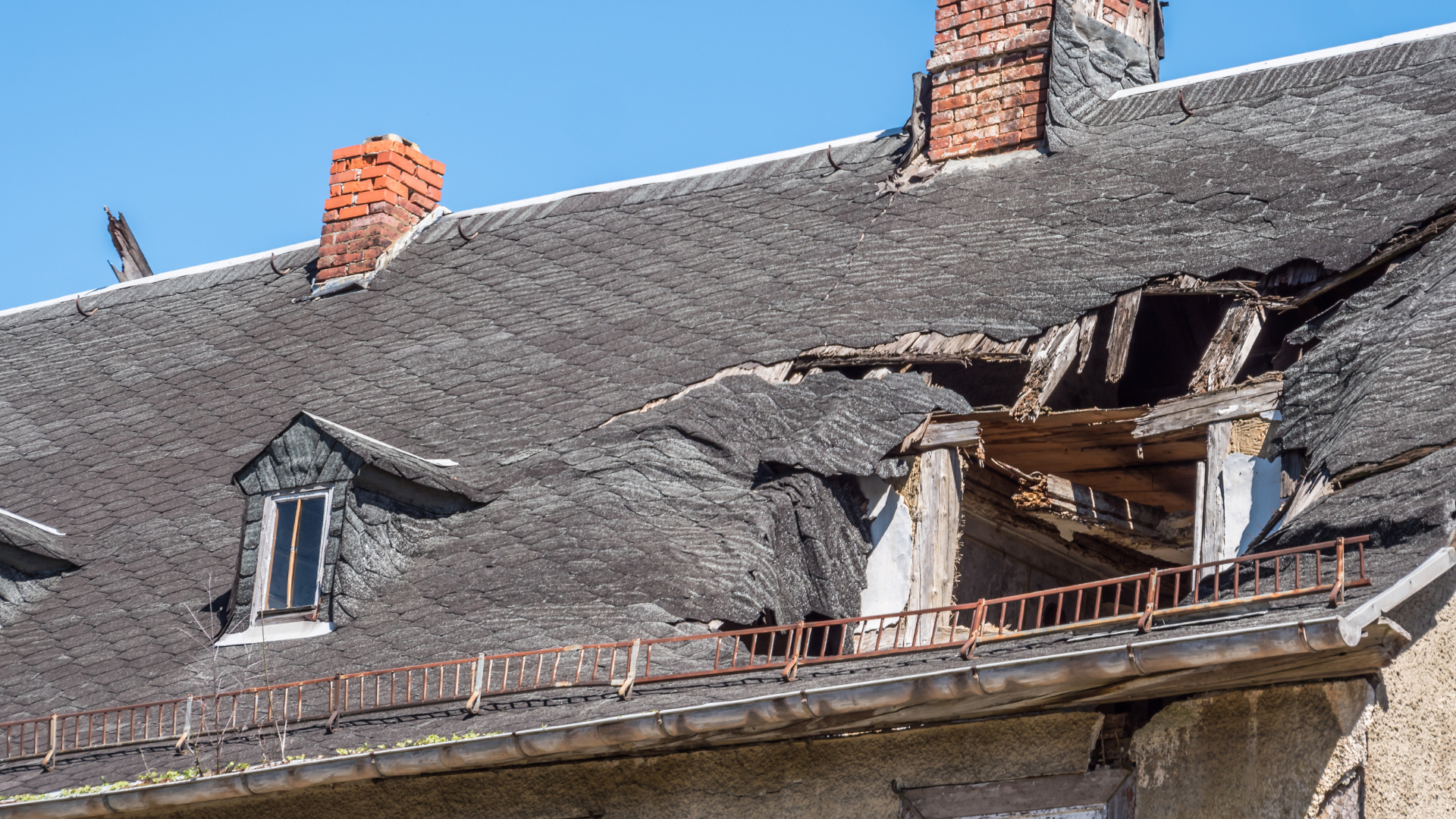
Pattern 1: Chimney Flashing Failure
The chimney is the most common repeating damage point on CT Shoreline roofs, and the reasons are structural.
A chimney sits through the roof as an independent masonry structure. The roof framing and the chimney move independently through thermal cycling and settling, which stresses the flashing connection continuously. During a nor'easter, sustained horizontal rain drives water at the chimney from one direction for hours, exploiting any weakness in the step flashing, counter-flashing, or sealant joints.
Why it repeats:
- The independent movement keeps working on the flashing year-round
- Sealant joints dry, crack, and pull away on a predictable cycle
- Each nor'easter tests the same joints from the same direction
- A patch that reseals without addressing metal condition fails next season
The fix that breaks the pattern is a proper assessment of the flashing metal, the counter-flashing in the mortar joints, and the cricket or diverter on the upslope side. The Roof Repair Pro article on resealing versus replacing flashing explains how that assessment works and when each approach is right.
Pattern 2: Windward Rake Edge Shingle Lifting
The rake edge on the windward side of the roof, the side that faces into the prevailing nor'easter wind, is where shingles lift most consistently.
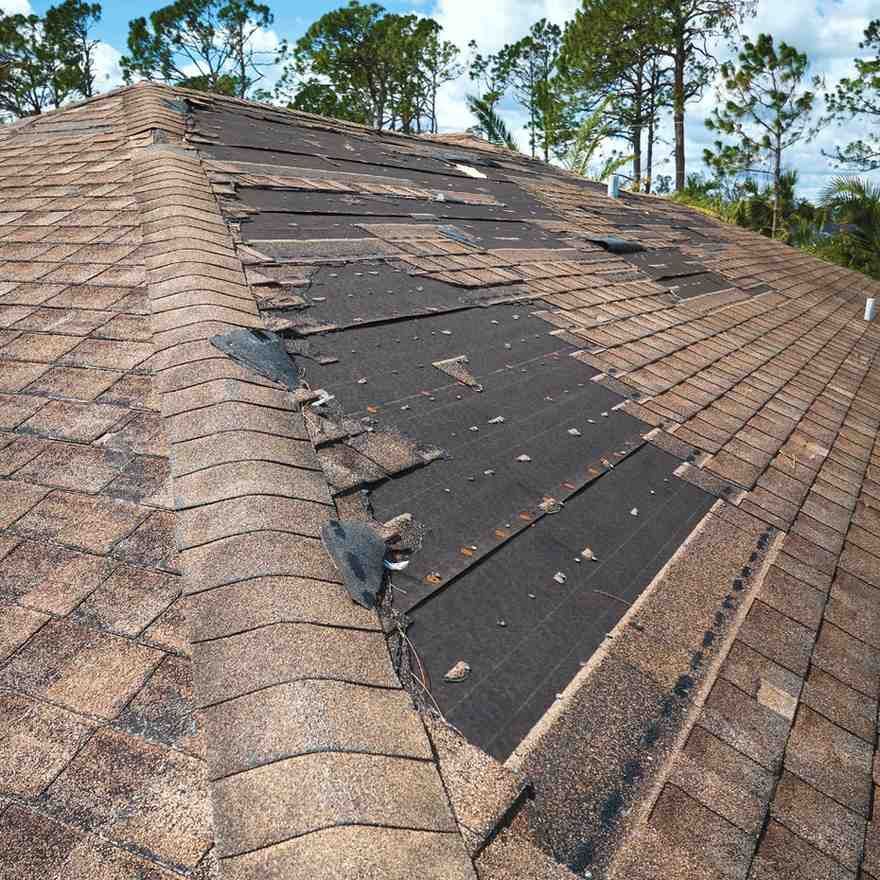
Rake edges are where the shingle field terminates, and the edge is inherently more vulnerable to wind uplift than the field because there is no adjacent shingle overlapping it from the outside. Sustained nor'easter wind works under the edge shingle repeatedly, and over time the sealant strip that holds the edge shingle loses its bond. Once lifted, the exposed underlayment takes direct rain, and the lifted shingle is likely to tear or detach entirely in the next event.
Why it repeats:
- The same rake edge faces the same prevailing wind
- Edge shingles have only one-sided overlap protection
- Sealant strip aging is progressive and predictable
- Each storm works the same edge further loose
The fix is replacing the damaged edge shingles and addressing the sealant condition along the full windward rake, not just the section that visibly lifted. Roof Repair Pro's shingle repair service handles edge, ridge, and field shingle work across the Shoreline.
Pattern 3: Dormer Wall Step Flashing Failure
Dormers are one of the most complex roof geometries, and the step flashing at the dormer wall is one of the most common leak points in nor'easter conditions.
Step flashing is a series of L-shaped metal pieces woven into the shingle courses along a wall intersection, and each piece has to channel water down the wall and off the roof without allowing any to enter behind the siding. Sustained horizontal rain during a nor'easter drives water at this junction for hours from one direction, and any gap in the step sequence, any lifted piece, any failed sealant, lets water into the wall cavity.
Why it repeats:
- The same dormer faces the same wind direction each storm
- Step flashing relies on correct lapping and sealing at every piece
- One failed piece creates a persistent entry point
- The leak appears inside, far from the actual entry
The challenge with dormer leaks is that the water enters behind the siding and travels down the wall cavity before showing up inside the home, which means the visible damage and the entry point can be separated by several feet. Tracing the leak to the actual failed step piece requires getting on the roof and inspecting the full step run.
Pattern 4: Valley Transition Failures
Roof valleys, where two sloping planes meet, concentrate water flow, and in a nor'easter they concentrate it at high volume for an extended duration.
A properly installed valley handles that volume. But valleys that have accumulated debris, lost their sealant integrity, or have shingles that have been cut too close to the centerline during previous repairs leak under the sustained, heavy rainfall of a nor'easter. The problem repeats because the same valley carries the same volume every storm, and the weakness is geometric rather than random.
Why it repeats:
- Same geometry concentrates the same volume every storm
- Debris accumulation gradually restricts flow capacity
- Shingle cuts too close to the valley centerline expose the underlayment
- Each storm sends the maximum water volume through the weakest point
Valley repairs often require removing and recutting the shingles along the valley line and, in some cases, replacing the valley metal or underlayment beneath. This is a repair that addresses the flow path rather than patching the symptom.
Pattern 5: Vent Boot and Pipe Collar Degradation
Vent boots, the rubber or neoprene seals around plumbing vent pipes, degrade on a predictable timeline from UV and thermal cycling, and they are among the simplest and least expensive repairs on the list.
The rubber cracks, pulls away from the pipe, and allows water to run down the pipe and into the roof assembly. Because the pipe penetrates the roof in the same spot permanently, the leak returns every time it rains once the boot has failed. Vent boot replacement is a straightforward repair that Roof Repair Pro includes as a standard service, and catching it before the fall storm season prevents the interior water damage a leaking boot produces through the winter.
How to Break the Pattern Before Fall
The point of understanding these patterns is to break them before nor'easter season, not to diagnose them again after.
| Damage pattern | Pre-season check | What breaks the cycle |
|---|---|---|
| Chimney flashing | Inspect sealant and metal condition | Reseal or replace per actual metal condition |
| Windward rake shingles | Check edge adhesion along the prevailing wind side | Replace compromised edge, reseal the full run |
| Dormer step flashing | Inspect each step piece and sealant | Replace failed steps, re-integrate with siding |
| Valley transitions | Clear debris, check shingle cut line and metal | Recut shingles, repair or replace valley components |
A pre-season inspection that checks these five points specifically is far less expensive than the emergency repairs they prevent. Roof Repair Pro's inspection and second opinion service covers each of these on every inspection, and the written report identifies which ones are active concerns on a specific roof.
For the broader question of whether storm damage calls for a repair or a full replacement, the article on storm damage repair versus full roof replacement covers that decision framework.
If your roof has leaked in the same spot during the last two nor'easters, or if you want to catch the vulnerability before this season's storms find it, Roof Repair Pro can inspect the full roof, identify which patterns are active, and repair them before fall on your Madison, Guilford, Branford, Old Saybrook, or Clinton property.
Flashing Repair | Shingle Repair | Storm Damage Repair | Roof Leak Repair | Inspection and Second Opinion | Contact Roof Repair Pro
(475) 800-8876 | roofproofct.com | CT Shoreline | Licensed HIC #0706616