Why September Is the Right Time for a Roof Inspection Before Connecticut’s Fall Storms
A roof can look fine from the driveway and still be one storm away from leaking. Lifted shingles can reseal poorly, flashing can loosen at a chimney or wall transition, vent boots can crack, and small sections of damaged decking can stay hidden until wind-driven rain pushes water into the weak point.
At Roof Repair Pro, we use a roof inspection to find those small failures before they turn into emergency calls. Because we are a repair-only roofing company, the goal is not to turn every inspection into a replacement conversation. We are looking for the specific components that are vulnerable and deciding whether they actually need repair.
For Madison homeowners, September is the right time to do that because fall storms are close enough to matter, but there is still time to address small problems before the weather becomes more disruptive.
Why September 2026 Is the Right Inspection Window
The National Weather Service’s 1991-2020 precipitation normals show about 4.55 inches of September precipitation in New Haven County, which includes Madison, Guilford, and Branford. NWS Northeast River Forecast Center
NOAA’s updated September 2026 outlook, issued August 31, now favors above-normal precipitation across much of the Northeast. NOAA Climate Prediction Center
That does not mean every September storm will be severe. It means the roof is entering a wetter seasonal window when small weaknesses can be tested repeatedly.
September is also useful because many fall roof problems are easier to repair before temperatures drop further, leaf debris builds up, and the next round of wind-driven coastal weather arrives.
Schedule an inspection now if:
- You found shingles in the yard this summer
- The roof leaked during a previous nor’easter
- A chimney or dormer has stained the ceiling before
- The roof is older but still performing well overall
- Flashing looks rusted or separated
- A tree limb recently hit the roof
- You have not had the roof inspected in several years
- You want to know whether a repair is needed before winter
A September inspection is most valuable when it finds a repairable problem while it is still small.
What We Check During a Fall Roof Inspection
A useful inspection is more than a quick look at the shingle field.
Roof Repair Pro starts from the ground, then gets on the roof when conditions allow and checks the components most likely to fail during wind and rain.
What the Inspection Covers
| Roof Area | What We Look For |
|---|---|
| Shingle field | Lifted tabs, missing shingles, cracks, granule loss, brittle sections |
| Ridge and rake edges | Wind-lifted shingles, loose ridge caps, edge damage |
| Chimneys | Step flashing, counterflashing, apron flashing, sealant condition |
| Dormers and sidewalls | Step flashing, siding transitions, open joints |
| Valleys | Debris, worn shingles, failed metal, water-channel problems |
| Vent boots | Cracks, failed rubber collars, loose flashing |
| Skylights | Perimeter flashing and visible seal failures |
| Decking | Soft areas or signs of localized water damage |
| Gutters and roof edge | Displacement, fascia issues, drainage problems |
Our inspection and second opinion service is built around getting a complete picture rather than diagnosing the roof from one visible symptom.
That matters because the place where water appears inside the house is not always directly below the point where it entered.
Five Problems Fall Storms Commonly Expose
Some roof defects stay quiet in normal rain and become obvious when wind changes the direction and pressure of the water.
1. Missing or lifted shingles
A shingle does not have to be completely gone to create a problem. Wind can break the seal strip and leave the tab looking normal from the ground while making it easier for wind-driven rain to get underneath.
2. Chimney flashing failure
Chimneys create one of the most complex roof transitions because water has to be directed around four sides of masonry. Failed step flashing, counterflashing, apron flashing, or sealant can create repeated leaks during heavy rain.
3. Dormer and sidewall flashing problems
Step flashing at wall transitions is another common failure point. When one piece moves, corrodes, or is installed poorly, water can enter behind the siding or roofing.
4. Cracked vent boots and pipe collars
Rubber components age differently from shingles and can split around plumbing penetrations even when the surrounding roof still has years of useful life.
5. Soft or damaged decking beneath an old leak
A leak that was patched at the surface may have already affected the wood below. Soft decking changes the repair because new shingles or flashing need a sound substrate.
Our chimney flashing repair service focuses specifically on the roof-to-chimney transition because that area deserves more than another layer of sealant.
A 15-Minute Ground Check Homeowners Can Do First
You do not need to climb onto the roof to gather useful information.
Walk around the house from the ground and look at the roofline from several angles.
Check for:
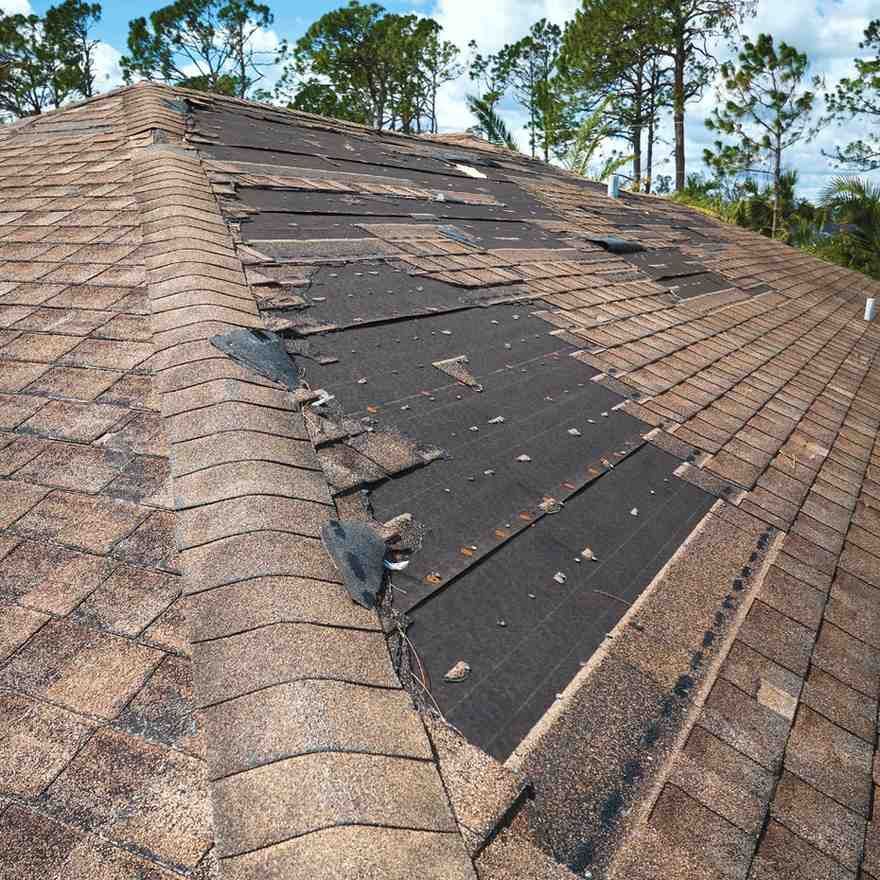
- Missing shingles or exposed underlayment
- Shingle tabs that look raised or uneven
- Ridge caps that appear displaced
- Debris from shingles in the yard
- Bent or separated flashing visible near a chimney
- Gutter sections pulling away from fascia
- Tree limbs resting on the roof
- Dark stains on soffits or fascia
- Granules collecting heavily at downspout discharge
Then go inside.
Look at ceilings and upper walls near chimneys, skylights, dormers, bathrooms, and roof valleys. New stains, peeling paint, bubbling drywall, or musty attic areas can be early signs of water entry.
Do not climb onto the roof yourself just to complete the inspection. A damaged or wet roof is not the place to confirm a problem from close range.
Photos from the ground are useful. We can compare what you saw with what we find once we get on the roof.
Missing Shingles Do Not Automatically Mean Roof Replacement
One of the most useful reasons to schedule a roof inspection near me before fall is to separate a local repair from a whole-roof problem.
Roof Repair Pro is repair-only. We do not install replacement roofs, so our inspection is focused on whether the existing system can be repaired responsibly.
A targeted repair often makes sense when:
- Shingle loss is limited to one section
- Surrounding shingles are still flexible and well bonded
- Granule loss is not widespread
- Decking beneath the damaged section is sound
- Flashing problems are localized
- The roof is not showing widespread age-related failure
Replacement becomes more likely when:
- Deterioration covers the entire roof
- Shingles are brittle across multiple slopes
- Decking damage is extensive
- Leaks are occurring in several unrelated areas
- Repair would leave too many failing components behind
Our storm damage repair vs replacement guide explains that decision in more detail.
If a few missing shingles are the only issue, we want to repair the damaged section rather than turn a small problem into a larger project.
Chimney Flashing Deserves Extra Attention Before Fall Rain
A chimney can leak from more than one place.
Water near a chimney may be coming from step flashing, counterflashing, apron flashing, a back pan, nearby shingles, or deteriorated decking. It can also come from the chimney crown, cap, masonry, or another upper-chimney component.
That is why chimney flashing repair should start with diagnosis.
At Roof Repair Pro, we inspect the roof-side transition and determine whether the roofing system is actually the source. If the problem is higher on the chimney, we identify that distinction so the homeowner is not paying for the wrong repair.
Watch for these clues before fall:
- Ceiling stains near the chimney
- Rusted or loose visible flashing
- Cracked sealant around counterflashing
- Water staining on chimney-side roof decking
- Repeated leakage during wind-driven rain
- A leak that only appears from one storm direction
Our chimney leak diagnosis service separates roof-side problems from chimney-top problems before work begins.
That matters in shoreline towns because salt air can accelerate corrosion on exposed metal flashing and fasteners.
What Fall Roof Maintenance Is Actually Worth Doing
Fall roof maintenance should focus on correcting known vulnerabilities, not creating a long list of unnecessary services.
The highest-value work usually comes from inspection findings.
High-Value Pre-Storm Maintenance
| Finding | Useful Action |
|---|---|
| One missing shingle section | Replace and reseal affected shingles |
| Loose flashing | Re-secure or replace failed flashing |
| Cracked vent boot | Replace boot or collar |
| Debris in valley | Clear debris and inspect underlying material |
| Localized soft decking | Open repair area and replace damaged wood |
| Loose ridge cap | Repair affected ridge section |
| Failed sealant at transition | Remove failed material and reseal correctly |
| Gutter pulling from fascia | Correct attachment before overflow worsens edge damage |
The wrong approach is applying roof cement everywhere “just in case.”
Sealants can be useful when they are part of the correct repair, but they should not be used to hide failed flashing, damaged shingles, or rotten decking.
Our roof flashing repair service is built around repairing the failed component rather than coating over the symptom.
What Does a Roof Inspection or Repair Cost in Madison?
Our roof inspections are free.
If we find a repairable problem, you receive a written quote before work begins. Most residential roof repair jobs in Madison run between $250 and $1,500, depending on the repair type, materials, roof pitch, access, and extent of damage.
That range covers the kinds of localized work we handle regularly, but the final price depends on what the inspection actually finds.
What Changes the Repair Cost?
| Cost Factor | Why It Matters |
|---|---|
| Repair type | Shingle, flashing, vent, and decking repairs require different work |
| Roof pitch | Steeper roofs require more setup and safety control |
| Access | Tight lots and difficult roof sections can add time |
| Material | Matching shingles and flashing components affect scope |
| Decking damage | Soft wood under the roof adds repair work |
| Chimney complexity | Four-sided flashing systems take more time than simple penetrations |
| Storm damage extent | Larger affected areas require more material and labor |
| Emergency stabilization | Tarping or temporary protection can add a separate step |
Roof Repair Pro provides a written quote before repair work starts, and that number does not change once the approved scope begins.
The value of the September inspection is that a small repair can often be completed before repeated fall rain turns the same weak point into damaged insulation, ceilings, or interior finishes.
At Roof Repair Pro, a roof inspection is about finding the repairable weakness before fall weather turns it into a larger leak. We look at shingles, flashing, penetrations, decking, roof edges, and the areas where wind-driven rain most often gets in.
If the roof is sound, we will tell you. If one section needs repair, we will show you what failed and provide a written quote before work begins.
For homes in Madison, Guilford, Clinton, and Branford, September is the right time to handle roof maintenance while the problem is still a repair instead of waiting for the next storm to make the decision for you.
Related Services & Pages
Roof Inspection and Second Opinion
Roof Repair in Madison
Chimney Flashing Repair
Chimney Leak Repair
Roof Flashing Repair
Storm Damage Roof Repair
Emergency Roof Repair