Why Small Roof Leaks Get Worse After the First Freeze in Guilford
A small roof leak can seem manageable when it produces only a faint ceiling mark. The first hard freeze changes conditions around an opening that already contains moisture. Water expands as it freezes, roofing materials contract, and melting ice may return to the same path. That is why roof leak repair in Guilford, CT should address the defect before winter enlarges it.
Not every stain becomes an emergency after one cold night. Inspection separates an inactive mark from current moisture and identifies the source. Madison, Branford, North Branford, and Clinton share the weather, but roof design determines how leaks behave. Early action allows focused repair before wet decking, frozen surfaces, or snow cover make access harder.
How Freezing Weather Changes a Small Roof Leak
A roof leak begins with an opening in the water-shedding system, not with the interior stain. Rain may pass through a lifted shingle, loose flashing edge, cracked boot, open fastener, membrane seam, or deteriorated sealant before moving along underlayment and framing. If moisture remains in that pathway when temperatures fall, freezing can place pressure on already weak edges and joints. The cold also stiffens many roofing materials, so a brittle shingle or aged rubber component may tolerate less movement than it did in warm weather.
The next thaw can send liquid water back through the same path or through a slightly wider one. Snowmelt and refreezing at the eave may add water from a direction the roof does not normally have to manage, particularly when ice holds runoff in place. Moisture inside the assembly can also wet insulation, spread across roof decking, or drip at a different location from the exterior defect. A leak that appears larger after a freeze may reflect both a changing opening and a changing water path.
Roof Defects the First Freeze Often Exposes
The freeze does not have to create a new failure. It often reveals a component that was already loose, cracked, or improperly patched. Inspection should compare the symptom with the roof above instead of assuming the nearest shingle is responsible.
Common defects include:
- Lifted shingles: Cold-stiffened shingles may not seal around an existing crease.
- Loose flashing: Water can freeze within a narrow separation.
- Aged pipe boots: Split rubber admits water around a vent pipe.
- Exposed fasteners: An unprotected hole gives meltwater a direct route inside.
- Open membrane seams: Seams, patches, or penetrations may separate.
- Old roof cement: Surface patches can crack or conceal the original failure.
| Existing weakness | Winter effect | Likely evidence |
|---|---|---|
| Lifted shingle or broken seal | Cold stiffness and wind increase movement | Raised tab, crease, missing granules |
| Small flashing gap | Water freezes within or behind the joint | Stain near chimney, wall, vent, or valley |
| Cracked pipe boot | Rubber contracts around the pipe | Damp decking around a roof penetration |
| Exposed fastener | Meltwater follows the nail or hole | Small dark spot, wet sheathing, rusty nail |
| Aging membrane patch | Patch edge lifts or holds water | Blister, open edge, recurring low-slope leak |
Ice Dams Can Push Water Against the Roof’s Normal Direction
Most steep-slope roofing is designed to shed water downhill through overlapping layers. An ice dam interrupts that movement by holding meltwater above a frozen roof edge, allowing water to back up beneath shingles and toward openings that remain dry during ordinary rain. The U.S. Department of Energy’s Guide to Durable Attics identifies ice dams as a way water can seep under shingles and enter a home. Its guidance also connects durable attics with roof weatherproofing, air sealing, insulation, and ventilation rather than treating the visible ice as the only issue.
The Insurance Institute for Business & Home Safety similarly explains that snow can melt over a warmer roof area, refreeze near the colder eave, and trap later runoff. That backed-up water may find a cracked shingle, weak flashing detail, or inadequately protected eave and enter ceilings or exterior walls. Removing visible ice without addressing attic heat loss or the roof defect can leave the same pattern ready to repeat. Leak repair stops the opening, while ice-dam prevention addresses why water is being held against that opening.
What Freeze-Thaw Cycling Does to Roof Components
Roof materials respond differently to cold and movement. Shingles become less flexible, metal moves, rubber boots harden, and sealants must stay bonded. Permanent repair matches the method to the failed component.
Freeze-thaw damage may progress through this sequence:
- Moisture enters a small opening. The defect may be too narrow to see safely from the ground.
- The trapped water freezes. Existing separations and weak edges experience additional pressure.
- Materials move at different rates. Metal, asphalt, rubber, masonry, and wood do not expand or contract identically.
- The area thaws and becomes wet again. Water follows the original path or finds a newly opened edge.
- The cycle repeats. Fasteners loosen, sealant adhesion declines, or substrate damage spreads.
Not every winter leak comes from freeze-thaw action. Condensation, plumbing, siding, and attic problems can create similar stains. Roof Repair Pro’s Guilford leak-repair process traces moisture to the roof opening before recommending work. Diagnosis should fit the weather, detail, and condition found onsite.
Why Interior Water Signs May Appear Later
The point where water enters the roof and the place where it becomes visible indoors are often separated. Water can move along underlayment, roof decking, rafters, fasteners, insulation, and ceiling surfaces before it drips. During freezing weather, part of that moisture may temporarily remain as frost or ice within a cold attic area. A later warm period can melt the accumulation and produce a stain even when no rain is falling.
This delayed appearance makes weather history useful, but it does not replace inspection. A stain that grows during thawing may point toward ice-dam backup, concealed snow entry, or moisture stored in the assembly, while a mark that appears only during wind-driven rain may suggest flashing or a directional opening. Homeowners should note timing, photograph changes, and check accessible attic areas without stepping onto wet insulation or disturbing electrical components. A roofer can then compare those observations with roof conditions and distinguish active entry, stored moisture, and unrelated condensation.
Warning Signs That Call for Prompt Inspection
Homeowners can gather evidence without climbing onto a frosted roof. Ground-level and indoor observations show whether conditions are changing. Ice and wet shingles make winter roof access dangerous.
Watch for:
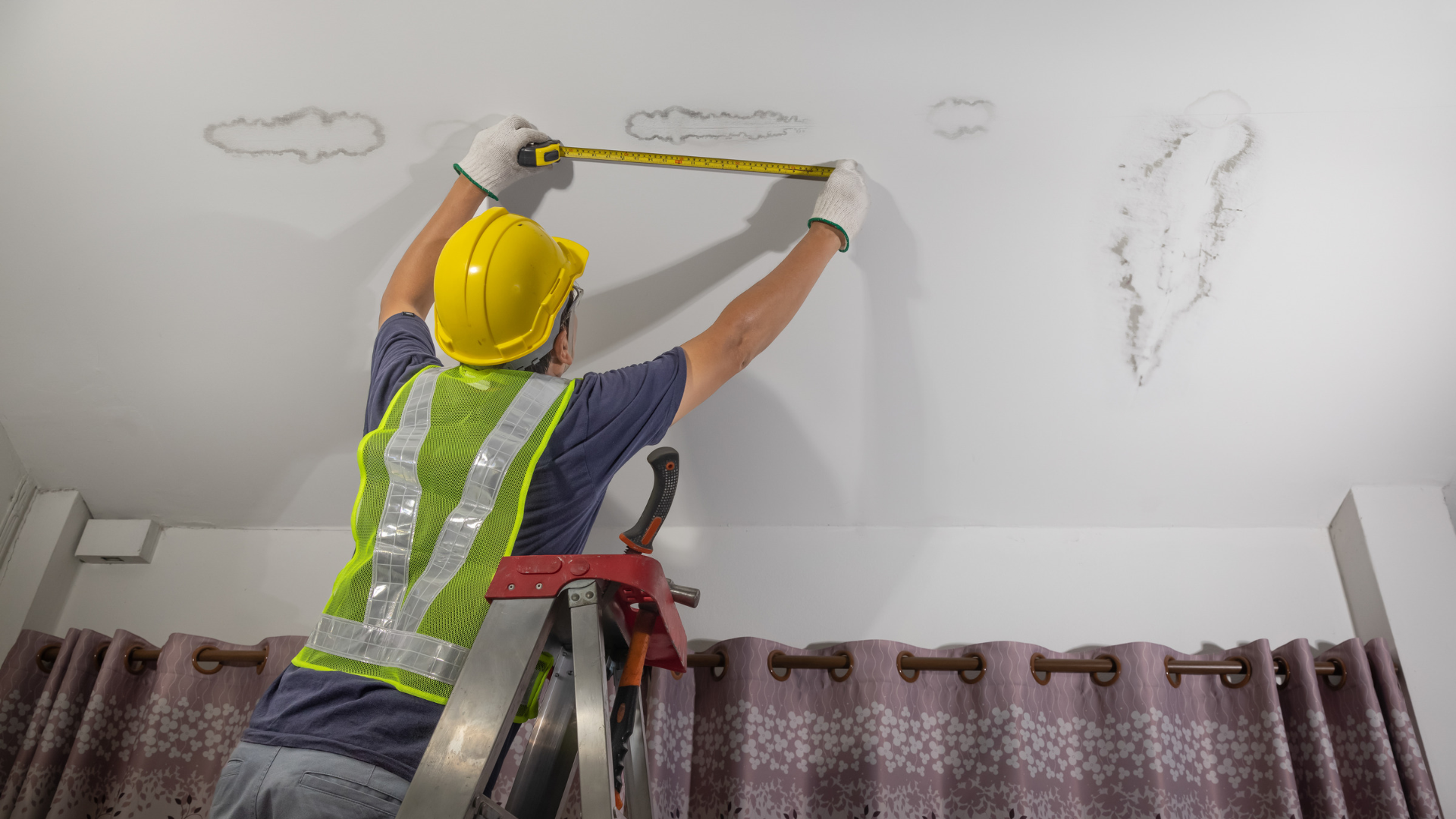
- A ceiling stain that grows after a freeze or during the next thaw.
- Damp insulation, dark roof decking, or frost in an accessible attic.
- Icicles or thick roof-edge ice concentrated below one warm roof area.
- Lifted shingles, loose flashing, or debris visible from the ground.
- Dripping near a chimney, exterior wall, skylight, vent, or plumbing penetration.
- A musty odor or peeling paint in an upper room after winter precipitation.
- A temporary patch that has split, lifted, or begun leaking again.
| Observation | What it may indicate | Safe next step |
|---|---|---|
| Growing ceiling stain | Active entry or thawing concealed moisture | Protect contents and schedule inspection |
| Wet attic insulation | Water path above or nearby | Photograph from safe footing and avoid wiring |
| Roof-edge ice with interior drip | Possible ice-dam backup | Keep people below clear and call for evaluation |
| Loose roofing visible from ground | Wind or freeze-related movement | Avoid ladders and document the area |
| Sagging ceiling material | Significant water accumulation | Leave the area below and seek urgent help |
Control an active leak indoors only when it is safe. Move belongings and keep people away from bulging ceilings or wet electrical fixtures. Never break roof ice with sharp tools or climb up to find the source. Roof Repair Pro provides emergency roof repair in Guilford when immediate protection is needed.
What a Lasting Winter Roof Repair Should Include
A lasting repair restores the component and surrounding water-shedding sequence. Cement or a tarp may reduce immediate entry, but permanent work should not rely on surface cover alone. The roofer should document the defect and conditions that could cause repeat failure.
Depending on the cause, the repair may include:
- Integrating replacement shingles into surrounding courses.
- Fastening new material into sound decking.
- Rebuilding failed flashing details.
- Replacing a cracked pipe boot instead of coating it.
- Preparing failed membrane patches for compatible repair.
- Replacing localized soft decking before covering it.
- Checking the transition from above and from accessible attic areas.
- Explaining whether attic or gutter conditions contribute to ice buildup.
Repair conditions matter. Snow, frost, and surface temperature can limit access and product performance. Temporary protection may be needed until the roof is dry and materials can be installed correctly. The scope should state what is temporary, permanent, and weather-dependent.
Use a Decision Framework Before Approving the Repair
The homeowner’s decision is not simply whether a leak looks small. It is whether the source is known, the surrounding roof remains serviceable, and the proposed repair restores the failed detail. Use these questions when reviewing photos and a written quote:
- Has the entry point been identified? An interior stain alone is not a repair location.
- Is the damage localized? Targeted repair makes sense when surrounding roofing and decking remain sound.
- Has water affected the substrate? Soft decking or wet insulation changes the scope.
- Is ice-dam backup part of the pattern? The roof opening and attic heat-loss conditions may both need attention.
- Can permanent materials be installed safely now? Temporary protection should have a defined follow-up plan.
- Does the estimate rebuild the component? Coating a failed boot, flashing system, or shingle course may not provide a durable result.
Published Roof Repair Pro Pricing and Cost Factors
For Guilford leak repair, we publish approximately $400–$600 for small roof repairs and approximately $800–$1,300 for larger repairs. Work outside those tiers is listed at $300 per hour plus materials. The written quote reflects source, roof type, access, flashing, material condition, and hidden damage. We explain the scope before work begins.
| Published Roof Repair Pro category | Planning figure | Typical scope factors |
|---|---|---|
| Small roof repair | $400–$600 | Accessible localized shingle, boot, or minor leak work |
| Larger roof repair | $800–$1,300 | Broader flashing, membrane, substrate, or multi-component work |
| Work outside standard tiers | $300 per hour plus materials | Complex access, extensive diagnosis, or unusual scope |
Ask whether the quote includes temporary protection, patch removal, roofing, flashing, underlayment, decking, and disposal. Surface sealant is not comparable with rebuilding a failed detail. Our Guilford roof-repair page confirms that customers receive a written quote before work begins. Any scope change after opening should be documented.
Fix the Leak Before Winter Adds Another Water Cycle
A small winter leak deserves a measured response, not an automatic replacement recommendation. First identify the entry point, check the surrounding roof and accessible interior, and determine whether freezing, ice backup, wind, or ordinary rainfall changes the pattern. That evidence supports a focused repair when the rest of the roof is sound and reveals when concealed substrate work is necessary. The right scope restores the failed component and explains any separate ice-dam or attic condition that could keep directing water toward it.
If a stain grows after freezing weather or a known roof defect has started leaking in Guilford, Roof Repair Pro can inspect it and provide a written repair plan. We serve Guilford, Madison, Branford, North Branford, and Clinton with repair-focused service for shingles, flashing, roof penetrations, flat roofs, and storm damage. Contact us for a free roof inspection before the next thaw or precipitation cycle sends more water through the same opening. We will show what failed, explain what can be repaired, and separate immediate protection from permanent work.
External references:
- U.S. Department of Energy: Guide to Durable Attics
- Insurance Institute for Business & Home Safety: Winter Weather Ready
- Building Science Education: Eaves Sealed in Cold Climates
Related Services