7 Things to Do Immediately After Storm Damage to Your Roof on the CT Shoreline
A nor'easter or a summer storm clears the Connecticut Shoreline, and you step outside in Madison, Guilford, Branford, or Old Saybrook to find shingles on the lawn, a stain spreading on the ceiling, or something that does not look right at the roofline. The storm is over, but for your roof and your wallet, the most important window is just beginning.
What a homeowner does in the first hours and days after roof storm damage shapes almost everything that follows: how much additional damage the home takes, how smoothly the insurance claim goes, and whether the repair happens on your terms or a storm-chaser's. Most of the costly mistakes happen right here, in the gap between discovering the damage and taking the right first steps.
Roof Repair Pro is a repair-only roofing specialist serving the Connecticut Shoreline. The team responds to storm damage across Madison, Guilford, Branford, Old Saybrook, and Clinton, and this is the order of operations that protects the home and the homeowner after a storm hits.
1. Stay Safe and Stay Off the Roof
Before anything else, the priority is that nobody gets hurt inspecting the damage.
A storm-damaged roof is not a safe place to be. Wet shingles are slick, compromised sections may not hold weight, and damage that is invisible from the ground can give way underfoot. Add downed power lines, and the danger extends well beyond the roof itself. The assessment work is what professionals are trained and equipped for, and it can wait the short time it takes to get one on site.
What to do in the first minutes:
- Stay off the roof entirely, no ladders, no climbing to look
- Keep clear of any downed or sagging power lines and call the utility
- Check for sagging ceilings inside, which signal water pooling above
- Move people, pets, and valuables away from any active interior leak
Nothing about roof damage is urgent enough to justify a fall. The inspection is a call away.
2. Check Inside the Home for Leaks and Water Intrusion
The roof damage you can see from the yard is only part of the picture. What is happening inside tells you how urgent the situation is.
Walk the top floor and the attic if it is safe to access. Water that has breached the roof shows up as ceiling stains, damp insulation, drips, or a musty smell before it becomes a visible leak. Finding it early matters, because the U.S. Environmental Protection Agency notes that materials dried within 24 to 48 hours of a water event usually will not grow mold, while materials left wet past that window will.
What to look for inside:
- Ceiling stains, especially ones that are spreading or darkening
- Damp or matted attic insulation directly under the roof deck
- Active drips or water tracking down walls
- A musty smell that signals moisture where you cannot see it
Catching interior water early is what keeps a roof repair from also becoming a drywall, insulation, and mold remediation project.
3. Document Everything Before Any Cleanup
This is the step homeowners skip most often, and it is the one that determines how the insurance claim goes.
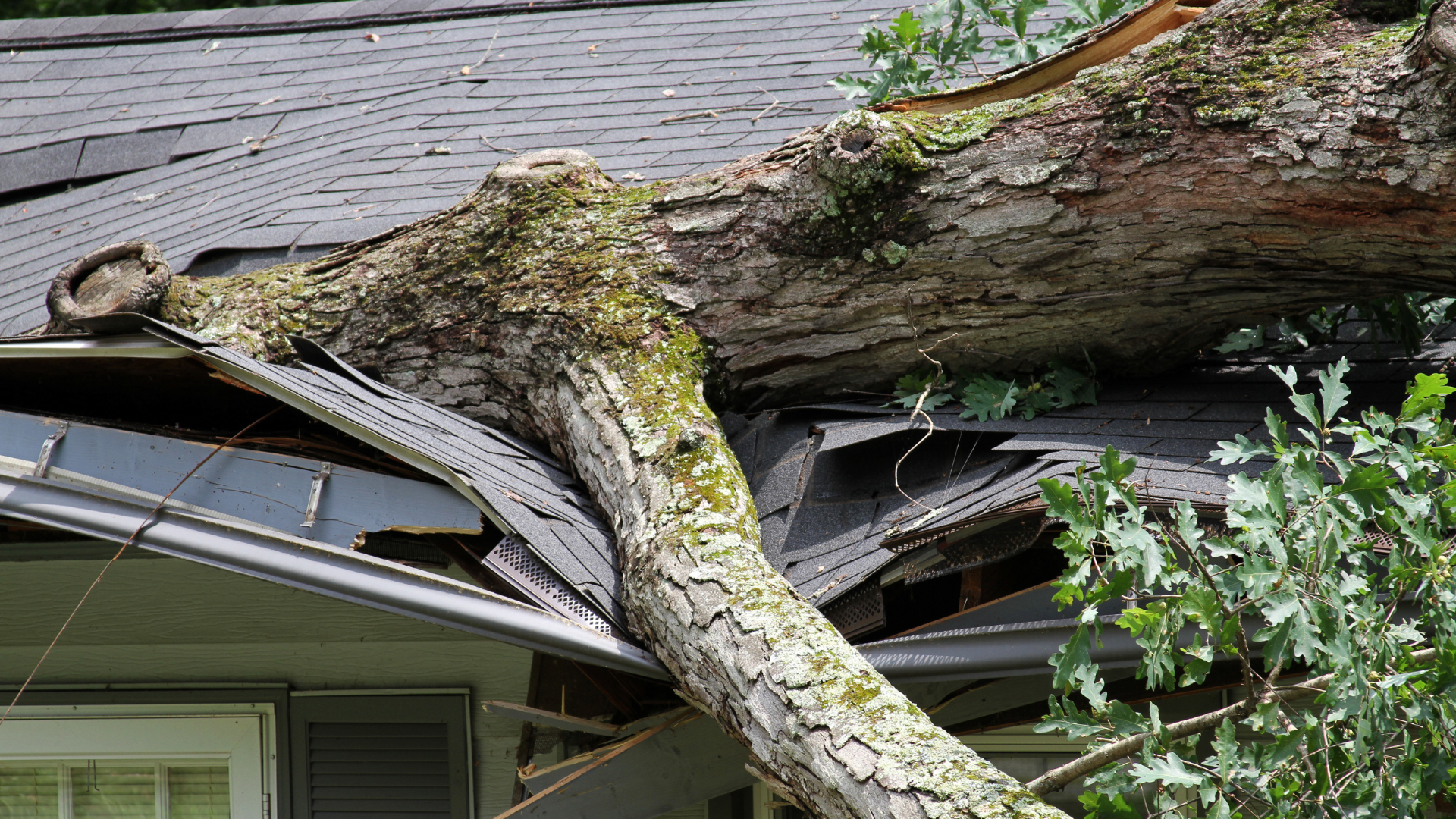
Before touching anything, before cleanup, before any temporary repair, photograph and video everything. The documentation you create now is the evidence your insurer uses to evaluate the claim, and once debris is cleared and tarps go up, the original condition is gone. Thorough documentation is the difference between a claim that resolves smoothly and one that gets disputed.
What to capture:
- Wide shots of the whole roof and property from the ground
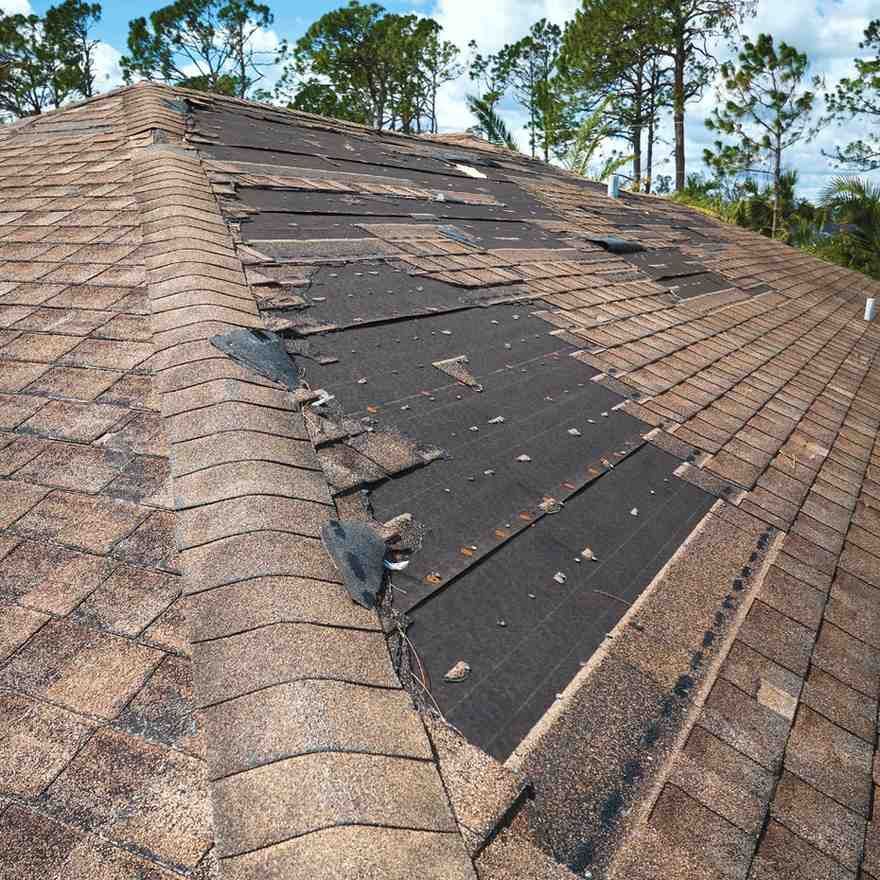
- Close-ups of missing shingles, displaced sections, and impact marks
- Every interior sign: ceiling stains, attic moisture, drips
- Fallen debris, downed limbs, and any shingles on the ground
- Timestamps, most phones record these automatically
Document first. Clean up second. Never the other way around.
4. Prevent Further Damage Where You Safely Can
Insurance policies expect homeowners to take reasonable steps to prevent additional damage after a storm. That does not mean climbing up to tarp the roof yourself.
Most policies include a duty to mitigate, meaning you are expected to prevent a bad situation from getting worse where you reasonably can. Safe, ground-level mitigation is appropriate. Anything involving the roof itself is a job for professionals with the equipment to do it safely, and emergency tarping done wrong can cause more damage or injury than it prevents.
Safe steps a homeowner can take:
- Move furniture and belongings away from interior leaks
- Place buckets and towels to contain dripping water
- Photograph the mitigation you do for the claim record
- Call for professional emergency tarping rather than doing it yourself
Roof Repair Pro provides emergency tarping to protect the home when a storm has breached the roof, which stops the interior damage clock while the permanent repair is scheduled.
5. Call Your Own Insurance Company
With the damage documented, the next call is to your insurer to open a claim, and the sequence here matters.
Contact your own insurance company, not a contractor first. Opening the claim gets the process started and, importantly, an adjuster may need to inspect the damage before repairs begin. If the roof is repaired before that inspection, your photos and video become the only record of the damage. The Connecticut Insurance Department provides guidance on storm damage claims, including what standard homeowners policies cover and the documentation homeowners should keep.
Getting the claim right:
- Call your insurer promptly and open the claim
- Ask whether they need to inspect before repairs start
- Keep every receipt: tarping, containment supplies, temporary lodging
- Get the adjuster's findings in writing before agreeing to anything
Standard Connecticut policies cover sudden storm damage from wind and rain, while pre-existing wear and deferred maintenance are typically excluded, which is another reason prompt documentation matters.
| Typically covered | Typically not covered |
|---|---|
| Wind-torn or missing shingles | Damage from deferred maintenance |
| Rain intrusion from storm damage | Pre-existing wear and aging |
| Emergency tarping to prevent worse damage | Repairs made before the adjuster inspects |
| Interior damage from a covered roof breach | Gradual leaks unrelated to the storm |
6. Get an Independent Roof Inspection
Before committing to any repair or replacement, have the roof assessed by someone whose recommendation is not tied to selling you a new roof.
This is where the repair-only distinction matters. A contractor whose main business is full roof replacement has a financial reason to reach the replacement conclusion. An independent, repair-focused inspection tells you what the roof actually needs, which is often far less than a storm-chasing sales crew will claim. Many storm-damaged Shoreline roofs need a targeted repair, not a full tear-off, and knowing the difference protects thousands of dollars.
What a proper inspection covers:
- The full shingle field, not just the obviously damaged area
- Every flashing point, vent boot, and penetration
- The decking condition beneath the surface where accessible
- An honest repair-versus-replacement recommendation in writing
Roof Repair Pro's inspection and second opinion service exists specifically for this, and because the company does not install new roofs, the assessment has no outcome attached to it.
7. Be Cautious of Storm-Chasers Knocking on Your Door
After every major storm on the Connecticut Shoreline, out-of-town contractors follow the damage, going door to door with urgency and pressure. This is the moment to slow down.
The Connecticut Department of Consumer Protection advises homeowners to be cautious of unsolicited post-storm contractor visits, to verify contractor licensing before any work, and to get multiple written estimates before committing to significant roofing work. Connecticut requires home improvement contractors to be licensed, and that license is verifiable through the DCP.
How to protect yourself at the door:
- Do not sign anything on the spot under pressure
- Verify the contractor is Connecticut-licensed before any commitment
- Be wary of anyone pushing a full replacement immediately
- Get an independent local inspection before deciding
- Choose an established local company over a crew passing through
A legitimate storm repair does not require an on-the-spot signature. Pressure is the warning sign.
The Right Sequence, Start to Finish
The order of these steps matters as much as the steps themselves. Doing them in the right sequence is what protects both the home and the claim.
| Step | Timing | Why it comes here |
|---|---|---|
| Stay safe | Immediately | Nothing is worth a fall |
| Check inside | First hour | Interior water sets the urgency |
| Document | Before cleanup | Evidence disappears once you clean |
| Mitigate safely | Same day | Policies expect reasonable prevention |
| Call insurer | Day one | Adjuster may need to inspect first |
| Independent inspection | Before repairs | Know what the roof actually needs |
| Vet contractors | Before signing | Avoid storm-chaser overcharges |
Rushing or reordering these, especially cleaning up before documenting or signing with a door-knocker before an independent inspection, is where the avoidable costs come from.
Why the CT Shoreline Sees So Much Roof Storm Damage
The Connecticut Shoreline takes a specific kind of weather beating, which is why having this sequence ready matters here.
The Connecticut DEEP Coastal Hazards primer describes the nor'easter as a defining feature of the region's weather, producing sustained high winds and heavy precipitation that stress roofs over many hours rather than the brief burst of a typical thunderstorm. The NOAA Connecticut State Climate Summary documents that extreme precipitation events have become more frequent in recent decades. For homeowners in Madison, Guilford, Branford, Old Saybrook, and Clinton, roof storm damage is not a rare event, which is exactly why knowing the right response ahead of time pays off.
Roof Repair Pro's storm damage repair service covers the full response across the Shoreline, and for the deeper question of whether damage calls for a repair or a replacement, the related article on storm damage repair vs full roof replacement after a nor'easter walks through how that decision gets made.
If a storm has damaged your roof in Madison, Guilford, Branford, Old Saybrook, or Clinton, Roof Repair Pro provides free on-roof inspections with photo documentation and an honest, written repair recommendation before any work begins. The inspection tells you what the roof actually needs, so you make the right call for your home and your budget.
Storm Damage Roof Repair | Inspection and Second Opinion | Roof Leak Repair | Shingle Repair | Flashing Repair | Contact Roof Repair Pro
(475) 800-8876 | roofproofct.com | CT Shoreline | Licensed HIC #0690521